
Catawba County Probate Venue
Probate in Catawba County is an estates function of the Clerk of Superior Court. The research is explicit that there is no separate probate court for the county. Estate files fall under civil, special proceeding, and estates records that can be searched on public terminals and reviewed at the clerk in the county where the file is located. Portal may show case information, but older or paper files may require in-person review.
The Catawba County court contact information lists the Estates/Juvenile Department at 828-695-6104. The Clerk of Superior Court is located at the Catawba County Justice Center, 100 Government Drive, Department A, Newton, NC 28658. Use the Clerk for estate case files and copy requests. Use the Register of Deeds for recorded powers of attorney, deeds, deeds of trust, and estate-related real-property instruments.
Estates Division of the Clerk of Superior Court
100 Government Drive, Department A
Newton, NC 28658
828-695-6104
Clerk main line: 828-695-6100
Catawba County Probate Terms
Estate files use terms that can look more formal than ordinary civil records. These definitions keep Catawba County probate records easier to read when reviewing wills, applications, inventories, and guardianship materials.
- Testator
- A person who made a will.
- Executor
- A person named to carry out the will and handle estate duties.
- Intestate
- A death without a valid will, so estate handling follows legal rules.
- Guardianship
- A court-supervised arrangement for a minor or incapacitated person.
- Conservatorship
- A financial management role for a person who cannot manage property or money.
Search Catawba County Probate Records
Probate lookup starts with the statewide court system and then moves to the Clerk if the file is not fully available online. The Judicial Branch help topic says civil, special proceeding, and estates information is available at public terminals in clerk offices. Paper files must be viewed in the county where the case is located, so Catawba County estate files should be requested through the Catawba Clerk.
- Search the NC eCourts Portal for estate or special proceeding case information when the name or file details are known.
- Use a public terminal at the Clerk of Superior Court if Portal does not show enough detail.
- Ask the Estates/Juvenile Department about existing estate files, copies, and paper-file review.
- Use the Catawba Justice Center mailing address for written copy requests when mailing is appropriate.
- Check the Register of Deeds for related real-estate instruments, powers of attorney, or recorded property records.
Catawba County Probate Search Fields
The research provides a probate search table based on the Portal, public terminals, file requests, and copy requests. These are the practical access fields for Catawba County probate records because estates can be part of court case information but may still need clerk-side paper review.
| Field Label | Type | Required | Options / Format Notes |
|---|---|---|---|
| Portal Smart Search | text | unspecified | Case information search; estates are included in NCAOC help material. |
| Public terminal search | terminal search | unspecified | Civil, special proceeding, and estates case information available at clerk offices. |
| Case file request | in-person clerk request | case-specific | Paper file viewed in the county where the case is located. |
| Copy request | clerk service | case-specific | Copies are available for a fee. |
Catawba County Estate Records
Catawba County probate records can include wills filed with an estate, applications for letters testamentary or administration, estate inventories, accountings, claims against estate, creditor notices, orders appointing personal representatives, receipts, releases, distributions, and closing documents. Guardianship files and special proceedings tied to real property, partition, sale, or estate issues may also appear.
These files can span more than one office when property is involved. The estate file may show appointment papers and accountings at the Clerk, while deed transfers, deeds of trust, or recorded powers of attorney are searched through the Register of Deeds. A complete probate search may need both the estate file and the recorded land index.
- Wills and applications: papers that start or support estate administration.
- Inventories and accountings: financial reports showing estate property, debts, and activity.
- Creditor claims and notices: filings that document estate debts or claim deadlines.
- Orders and letters: court papers appointing or authorizing personal representatives.
- Guardianship matters: files for minors or incapacitated persons, often with access limits.
- Property proceedings: special proceedings tied to real estate or partition issues.
Catawba County Probate Fees
Phase B requires a fee schedule, but the research did not provide itemized local estate filing fees in HTML. It identified the official statewide Current Court Costs page as the proper source for Estates Court Costs 2026 and Miscellaneous Court Costs 2026 PDFs. Do not substitute guessed probate fees.
| Item | Amount / Source Rule |
|---|---|
| Estate filing or administration costs | Use current statewide Estates Court Costs publication. |
| Certified or plain copies | Confirm through Clerk and current Miscellaneous Court Costs publication. |
| Special proceedings | Use current statewide special proceedings cost publication when applicable. |
| Related Register of Deeds records | Check Register of Deeds fee guidance for land or recorded instruments. |
The assigned image from the Current Court Costs publication index documents the official source for Catawba County probate cost confirmation.
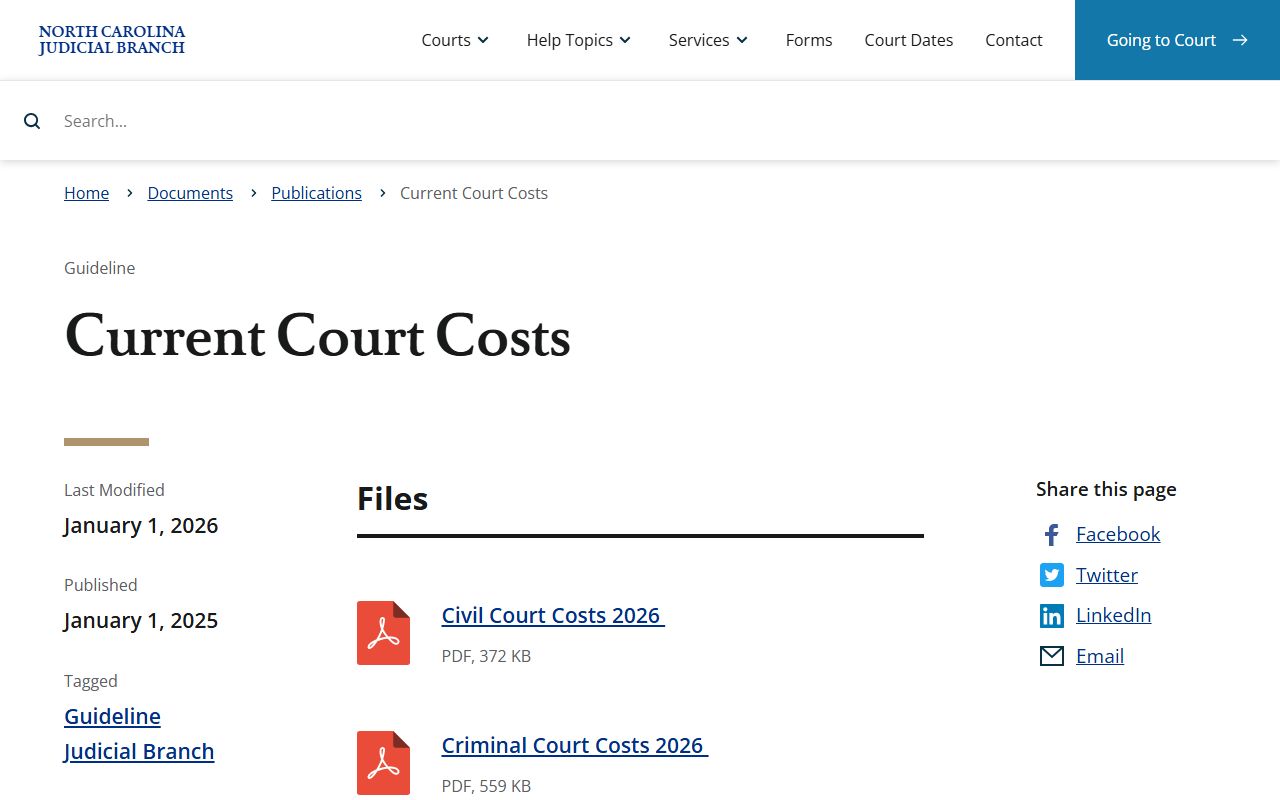
That source should be used because estate costs change and the research did not supply a complete local fee list.
Probate and Special Proceedings
Estate matters can overlap with special proceedings, real-property issues, partition, sale, or guardianship. Catawba County's court structure is part of North Carolina's unified trial division, with civil jurisdiction split between District Court and Superior Court by amount and subject matter. G.S. 7A-243 addresses the civil division amount-in-controversy split, while estate administration itself stays with the Clerk's estates function.
The assigned image from G.S. 7A-243 supports the civil trial-division context that can affect related Catawba County probate and special proceeding records.
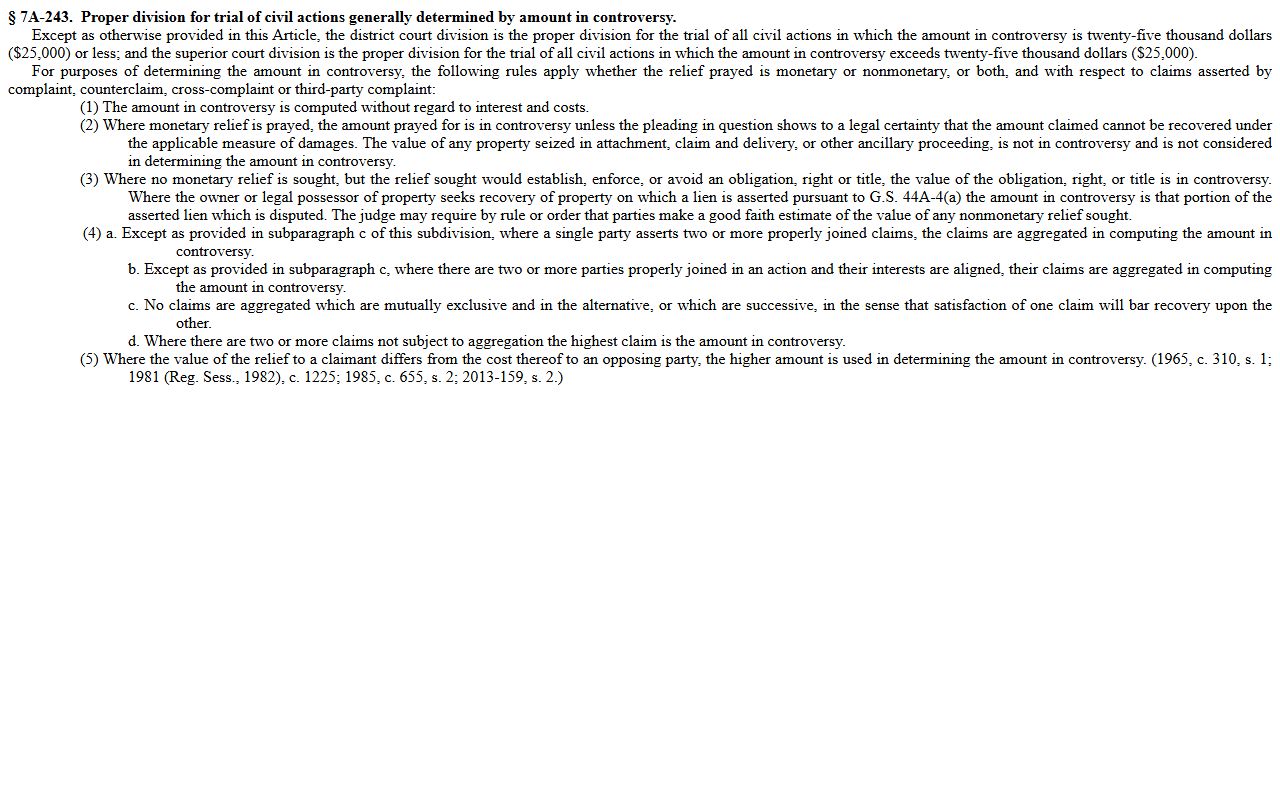
The statute does not create a separate probate court; it helps explain the broader civil court setting.
Restricted Catawba County Probate Records
Many estate files are public enough to search and review through clerk channels, but some records have limits. Guardianship files, juvenile-related materials, confidential financial information, protected identifiers, mental-health materials, sealed orders, and certain minor or incapacitated-person records may be restricted or redacted. Staff may require identity verification or a specific case file before copies can be provided.
Older estates may also require more direct clerk help than newer cases. Portal case information can identify a file, but paper inventories, accountings, receipts, or closing papers may still need a counter request in Newton. For mailed copy requests, include enough case and party detail for staff to identify the estate.
Use the Clerk's Estates/Juvenile Department for access questions, and keep related records separate. Real-property instruments are Register of Deeds records. Federal bankruptcy cases are not Catawba County probate records, even when a decedent, heir, or estate-related party appears in a federal file.
The assigned image from the PACER lookup for the Western District of North Carolina Bankruptcy Court documents the federal path when an estate-related issue belongs in bankruptcy court.
Bankruptcy records must be searched through federal systems and should not be confused with local estate files at the Clerk.