
Catawba County Court Records Online
The main online search path for Catawba County court records is the North Carolina eCourts Portal. The Portal offers Smart Search for court records and case information, Search Hearings for court dates, Make Payments for eligible cases, and NC Judgment Search. Catawba County was included in the October 13, 2025 eCourts rollout, so the statewide Portal now matters more than any old county-only lookup path.
The NC Judicial Branch Catawba County page links court records, court-date tools, civil calendars, criminal calendars, payment information, jury service, local rules, and courthouse services. Portal access can vary by record type and user role. Public users may see case information, hearings, parties, charges, judgments, and some documents, while sealed or restricted files stay out of ordinary public view.
- Open the NC eCourts Portal and choose Smart Search for case information or Search Hearings for court dates.
- Search by name, case number, citation, attorney, or other available filters, then narrow results to Catawba County when the option appears.
- Review the case number, court division, party names, hearing dates, disposition, and document access shown in the result.
- Use Make Payments only for eligible criminal, infraction, probation, or parole matters.
- If the online result is incomplete, contact the Clerk of Superior Court or use a public terminal at the courthouse.
The Remote Public Access Program is a separate NCAOC licensing path for real-time criminal and civil data access and extracts in all 100 counties. It is not the same as a casual public Portal search.
The manifest image for the Remote Public Access Program shows the statewide data-access route used when ordinary public lookup is not enough.
That program belongs in the court-records access chain because it explains why bulk or subscription users may have a different route from walk-up public searchers.
Catawba County Court Records Fields
Portal fields are broad because the same system serves civil, criminal, traffic, estate, special proceeding, and judgment work. The landing page also warns that CAPTCHA can appear every ten minutes for anonymous, registered, and elevated users. Registered or elevated access may be needed for expanded functions, but basic case lookup begins with public tools.
| Field Label | Type | Required | Notes / Format |
|---|---|---|---|
| Smart Search | Text search | Unspecified | Search court records and case information by name, attorney, citation, and more. |
| Search Hearings | Text and filters | Unspecified | Hearing searches can use name, attorney, case number, county, date range, and related filters. |
| Make Payments | Case or citation workflow | Conditional | Used only for eligible probation, parole, criminal, and infraction payments. |
| NC Judgment Search | Index search | Unspecified | Searches the judgment index maintained under North Carolina court record rules. |
| Register / Sign In | Account action | Optional | Registration and elevated access requests support expanded access where allowed. |
| CAPTCHA | Security control | When triggered | Applies to anonymous, registered, and elevated Portal users. |
The NC Judicial Branch services page groups the Portal with File & Serve, Guide & File, interpreter requests, criminal background checks, and public-record requests.
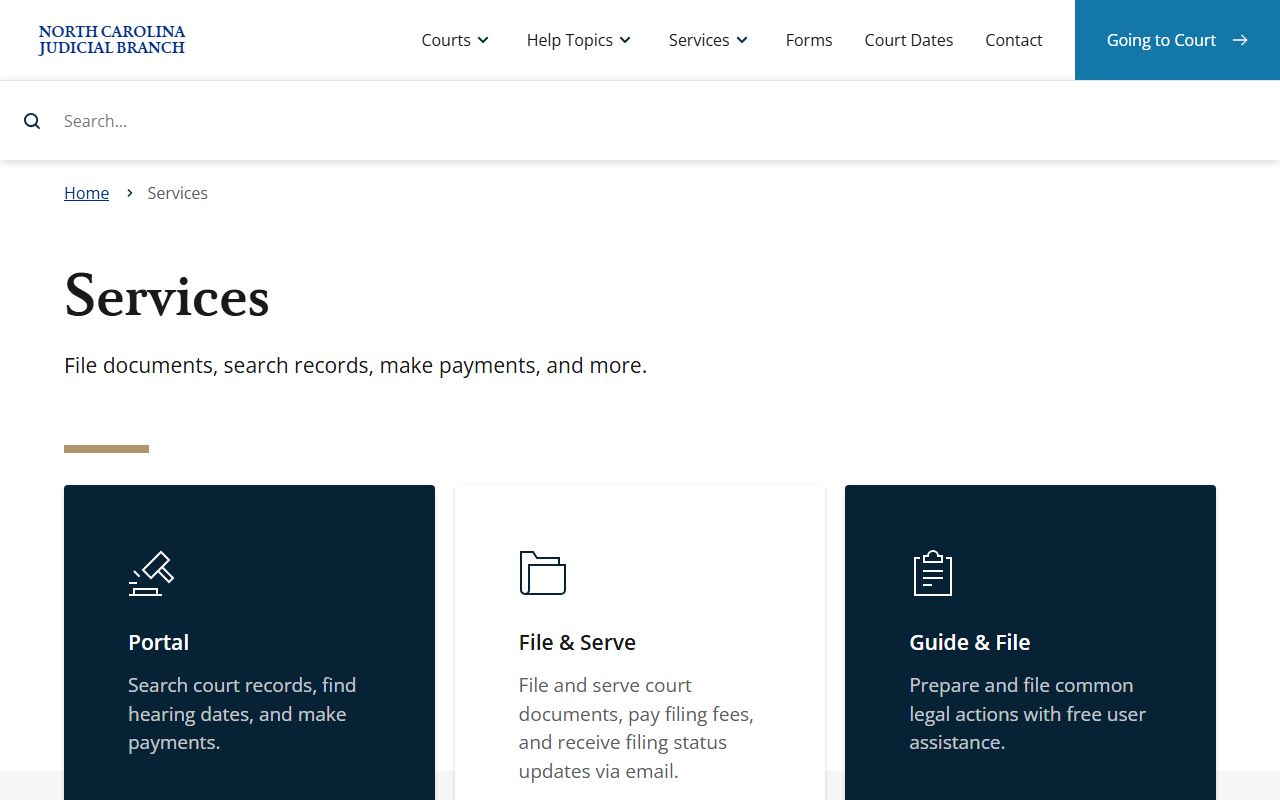
That services view helps separate case search from filing tools, payments, and records requests that follow different rules.
Catawba County Court Record Types
Catawba County court records are kept by the Clerk of Superior Court for both Superior Court and District Court trial divisions. Civil files may include complaints, summonses, answers, motions, orders, judgments, liens, foreclosures, evictions, partitions, condemnations, and appeals. Criminal court records may include charges, public warrants or orders for arrest, appearances, bond information, indictments, pleas, dismissals, verdicts, sentencing, probation terms, fines, costs, and restitution.
District Court handles traffic infractions, many misdemeanors, family cases, juvenile matters, small claims through magistrates, and lower-value civil cases. Superior Court handles felony criminal matters, civil cases over the District Court monetary line, and appeals from District Court. The North Carolina courts overview explains this statewide structure.
The statewide court structure matters because Catawba County does not run separate county courts outside the North Carolina Judicial Branch.
- Civil records include pleadings, motions, orders, judgments, liens, foreclosure records, and related filings.
- Criminal records include charges, appearances, pleas, dispositions, sentences, costs, and post-judgment motions.
- Traffic and infraction records include citations, waiver status, court dates, fines, costs, and failure-to-appear consequences.
- Estate and special proceeding records include wills, inventories, accountings, guardianship materials, and property-related proceedings.
- Family records can include divorce, custody, support, equitable distribution, and domestic violence filings, with limits for protected matters.
What Catawba County Court Records Show
A Catawba County court record may show only a short public index entry online, or it may include a full paper or electronic case file at the Clerk of Superior Court. The level of detail depends on the case type, age, document access, redactions, and whether the record is restricted. Jail roster rows reviewed in the research showed docket formats such as year, CR, number, and county code, while court files can include many more events and documents.
| Field | What It Shows |
|---|---|
| Case number or docket number | The court identifier used to track the file, hearings, payments, and related records. |
| Court and county | Whether the matter is in Catawba County District Court, Superior Court, or another listed court. |
| Parties | Plaintiff, defendant, petitioner, respondent, State, decedent, estate, or other party roles. |
| Dates | Filing date, offense date, citation date, hearing date, judgment date, or date confined. |
| Status or disposition | Pending, disposed, dismissed, guilty, not guilty, deferred, closed, appealed, sealed, or expunged. |
| Documents and financial fields | Motions, orders, judgments, costs, fines, restitution, bonds, fees, or payment status where public. |
For court dates rather than full case files, the official court pages also link a CourtDelta court-date tool. The manifest image from CourtDelta belongs here because the tool asks for contact details, a full name, and a case or citation number when checking a court date.
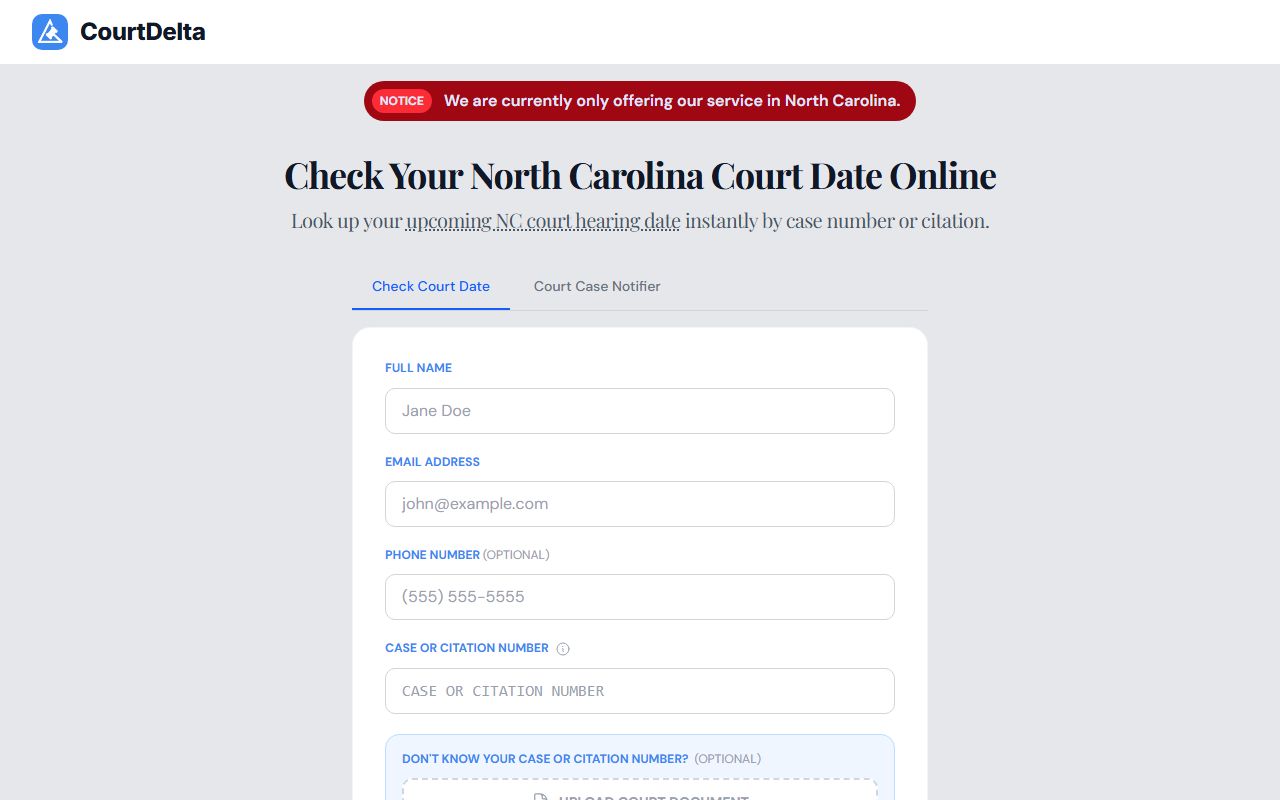
Court-date tools can confirm hearing information, but they do not replace the clerk's full file or a certified copy.
Catawba County Court Records Access
North Carolina public-record law starts with G.S. 132-1, which broadly defines public records made or received in public business. Court records, however, are also governed by court rules, redaction rules, sealing orders, confidentiality statutes, and the difference between case files and general agency records. The broader Chapter 132 public-records index is useful for public-record principles, but court users still start with court-specific channels.
The Judicial Branch court-records help topic directs users to the Portal, public terminals, and the clerk in the county where the file is located. Criminal background checks should be requested through the county clerk's office rather than relying on Portal alone. County or city documents outside the Judicial Branch, such as Sheriff reports or Register of Deeds certificates, must be requested from the office that holds those records.
The manifest image for North Carolina public-record statutes supports the public-access framework for Catawba County court records.
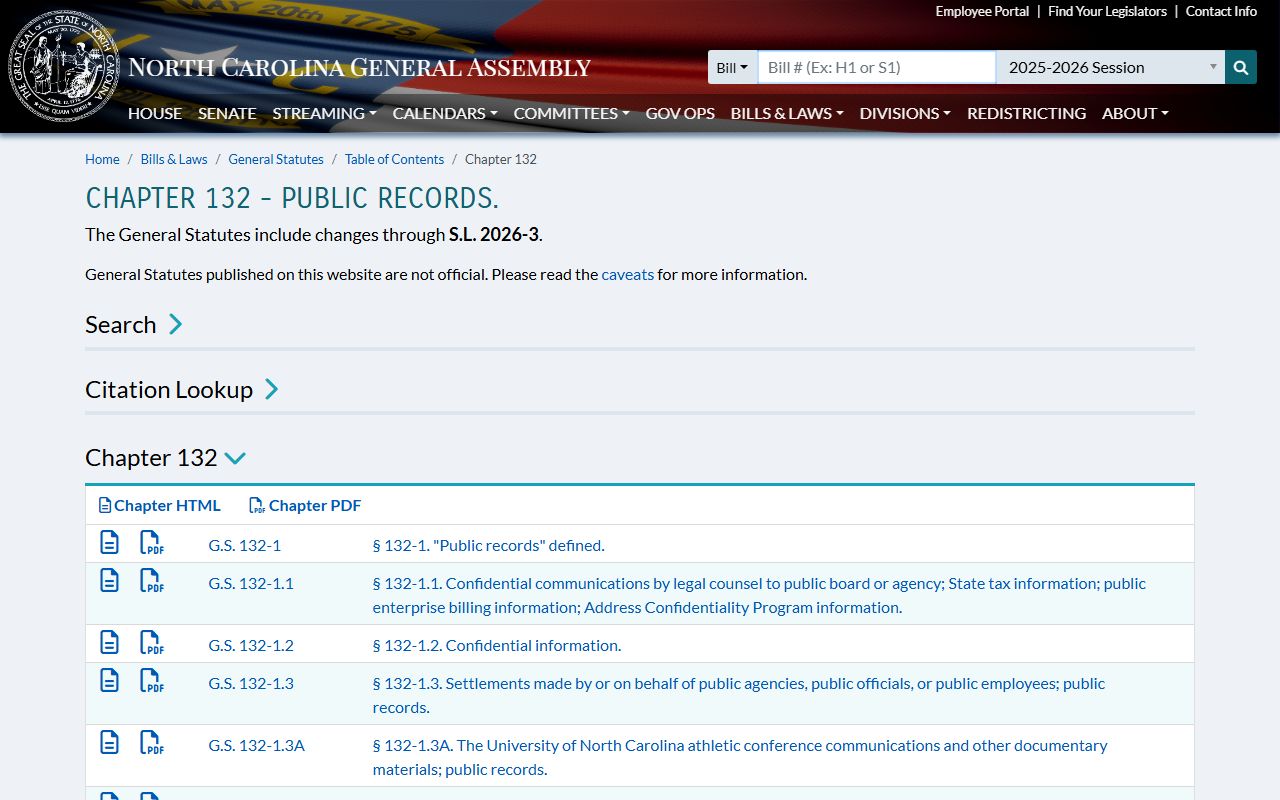
That statute index is a starting point, not a promise that every court document is open without limits.
Note: Public access does not override sealed cases, juvenile limits, expunction orders, or redaction of personal identifiers.
The manifest image for G.S. 132-1 anchors the state-law definition of public records.
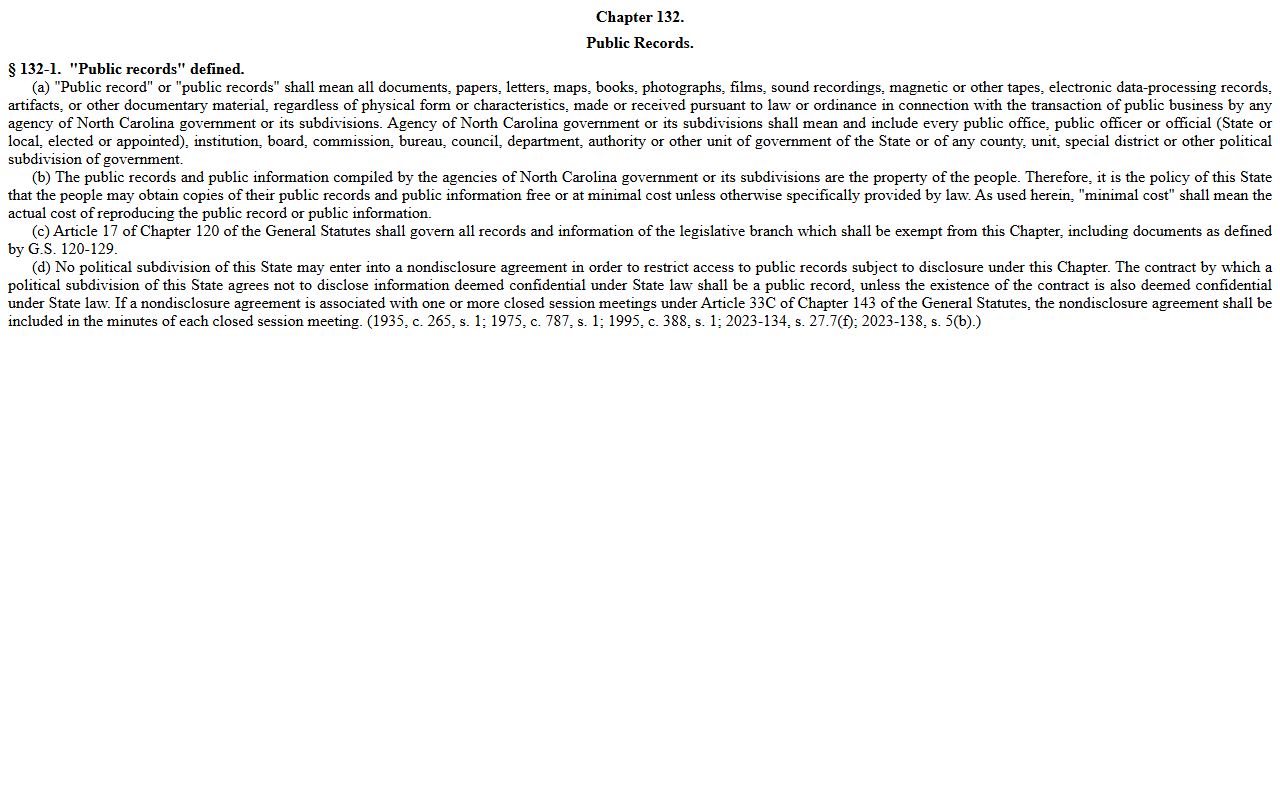
The statute is best read with the Judicial Branch rules for court files, because court access is not just a county records request.
Restricted Catawba County Court Records
Some Catawba County court records are not ordinary public case files. Juvenile delinquency and abuse, neglect, or dependency records are restricted. Adoption files are highly restricted. Mental health proceedings, protected addresses, minor identifying information, Social Security numbers, financial account numbers, sealed records, and expunged records may be withheld or redacted. Sealed search warrants or sealed indictments may become public later, but access depends on the case posture and court order.
Expunction is different from ordinary sealing. A qualifying petition is filed with the Clerk of Superior Court in the county where the person was charged or convicted. The Judicial Branch states that some dismissed or not-guilty matters may have no filing fee, while many petitions have a general filing fee listed in the research as $175. Processing can take months. If an expunction is granted, later copies may not be available because the file is destroyed or removed from normal public sources.
Catawba County Court Record Requests
When Portal does not provide the record, the local route is the Clerk of Superior Court at the Justice Center. Public self-service terminals at clerk offices can be used for criminal searches by defendant name, case number, or victim and witness name, and for civil, special proceeding, and estates information. Paper files must be viewed in the county where the case is located. Certified copies and ordinary copies may require fees from current statewide court-cost schedules.
Clerk of Superior Court
100 Government Drive, Department A
Newton, NC 28658
(828) 695-6100
Monday-Friday, 8:00 a.m.-5:00 p.m.