
Catawba County Court Docket Basics
A docket is the court's running list of case events. In Catawba County, a docket can show a filing, hearing, continuance, disposition, judgment, payment event, warrant-related event, or other court action. The term can also refer to a calendar, such as a civil calendar or criminal calendar for a session of court. That difference matters: a case docket tracks one file, while a court calendar groups many matters set for a date or session.
North Carolina's trial division is split between Superior Court and District Court. In Catawba County, Superior Court handles felony criminal matters, higher-value civil cases, and appeals from District Court. District Court handles misdemeanors, infractions, traffic matters, juvenile matters, family cases, small claims through magistrates, and lower-value civil work. The Judicial Branch court-type guide explains the statewide roles, while the Catawba County court page supplies local links and calendars.
The manifest image from the Catawba County Family Court Administration page is relevant because domestic and juvenile coordinators are part of local docket management.
Family and juvenile scheduling can involve coordinator contacts even when the public docket only shows limited case information.
Find Catawba County Court Dockets
Catawba County docket lookup starts with the NC eCourts Portal, which includes Smart Search and Search Hearings. The official Catawba County court landing page also links civil calendars, criminal calendars, local administrative schedules, payment information, and court-date tools. For a date-specific search, the CourtDelta link from the courthouse page may ask for a full name, email address, optional phone number, case or citation number, optional document upload, and terms confirmation.
- Use Search Hearings in the Portal when the goal is to confirm a hearing date, session, or calendar setting.
- Use Smart Search when the goal is to open a case result and read docket entries tied to that case.
- Enter the name, case number, citation number, attorney, county, or date range supported by the selected search path.
- Compare the result with civil calendars, criminal calendars, or local administrative schedules linked from the Catawba County court page.
- Contact the Clerk of Superior Court if the online docket omits a document, older entry, or certified copy need.
The eCourts go-live announcement matters because Catawba was in the final October 13, 2025 launch group.
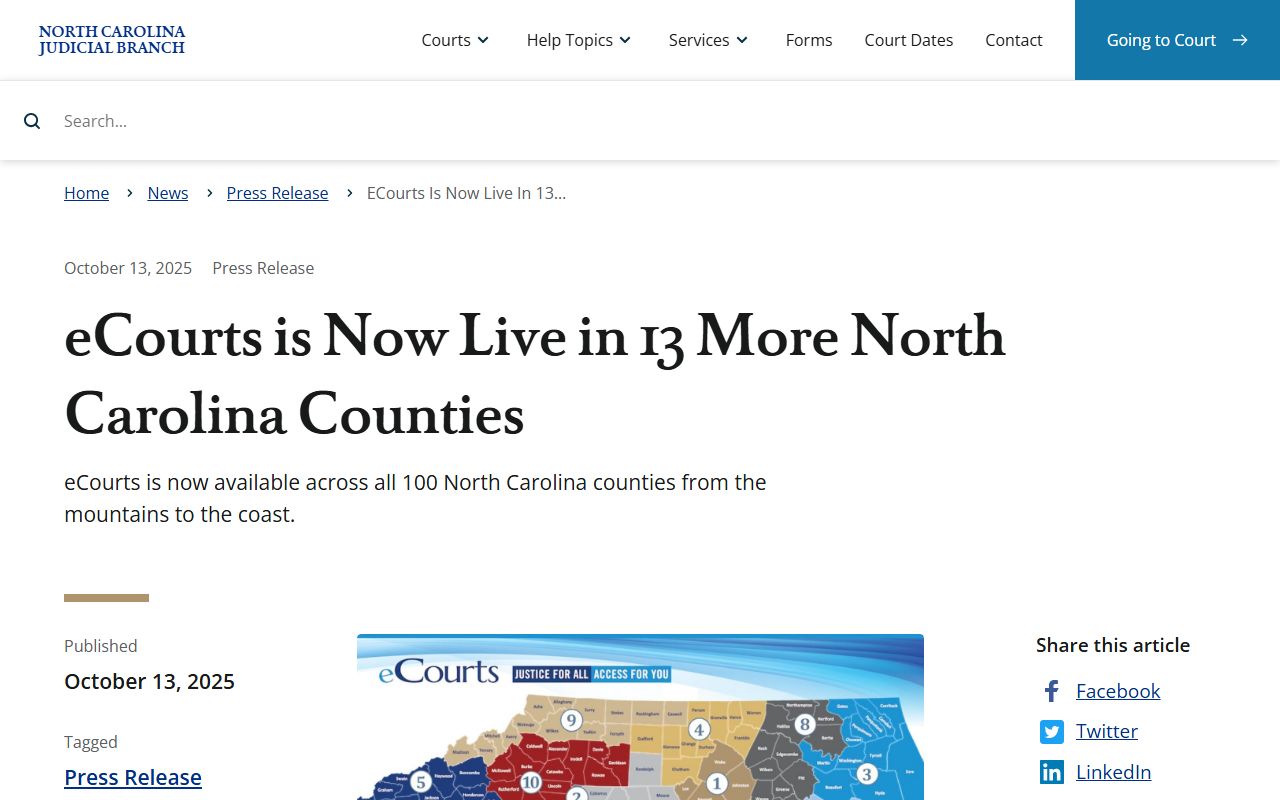
The rollout made online court records, eFiling, and electronic services central to docket access across all North Carolina counties.
Catawba County Docket Fields
Docket entries are short by design. They identify what happened, when it happened, who filed or acted, and what the next court event may be. A docket entry may not include the full text of a motion or order. If the document itself is needed, the next step is Portal document access where available, a public terminal, or a copy request through the Clerk of Superior Court.
| Field | What It Shows |
|---|---|
| Case number | The unique court file number used to connect calendars, payments, filings, and clerk requests. |
| Court division | Whether the matter is tied to District Court, Superior Court, magistrate matters, or a related calendar. |
| Entry date | The date a filing, order, calendar setting, payment, or other court event was recorded. |
| Event type | The docket label, such as hearing, arraignment, motion, judgment, continuance, disposition, or payment. |
| Party or agency | The party, attorney, prosecutor, officer, or court office tied to the event when shown. |
| Next hearing | The next date, time, session, courtroom, or calendar reference where public access permits display. |
Jail roster rows can also show docket numbers and upcoming court dates for people in custody, but those rows are custody records, not a full court docket. The court docket remains the better source for case progress.
Catawba County Docket Sources
The county's docket channels reflect North Carolina's unified court system. There is no separate municipal court docket for Catawba County court records in the research. Municipal police and citation agencies may issue charges or citations that file into District Court. Magistrates in Newton and Hickory handle preliminary criminal matters, small claims, and related processes, but they are not a separate public docket site.
- Superior Court calendars cover felony matters, higher-value civil cases, and District Court appeals.
- District Court calendars cover misdemeanors, infractions, traffic, family, juvenile, and district civil matters.
- Magistrate matters may create small claims, preliminary criminal, warrant, summons, or bond-related entries.
- Family Court Administration coordinates domestic and juvenile scheduling, with public access limits in protected cases.
- The Clerk of Superior Court is the local record keeper for both trial divisions.
The local Catawba County payment information page is also tied to dockets because eligible criminal and infraction payments depend on case or citation status.
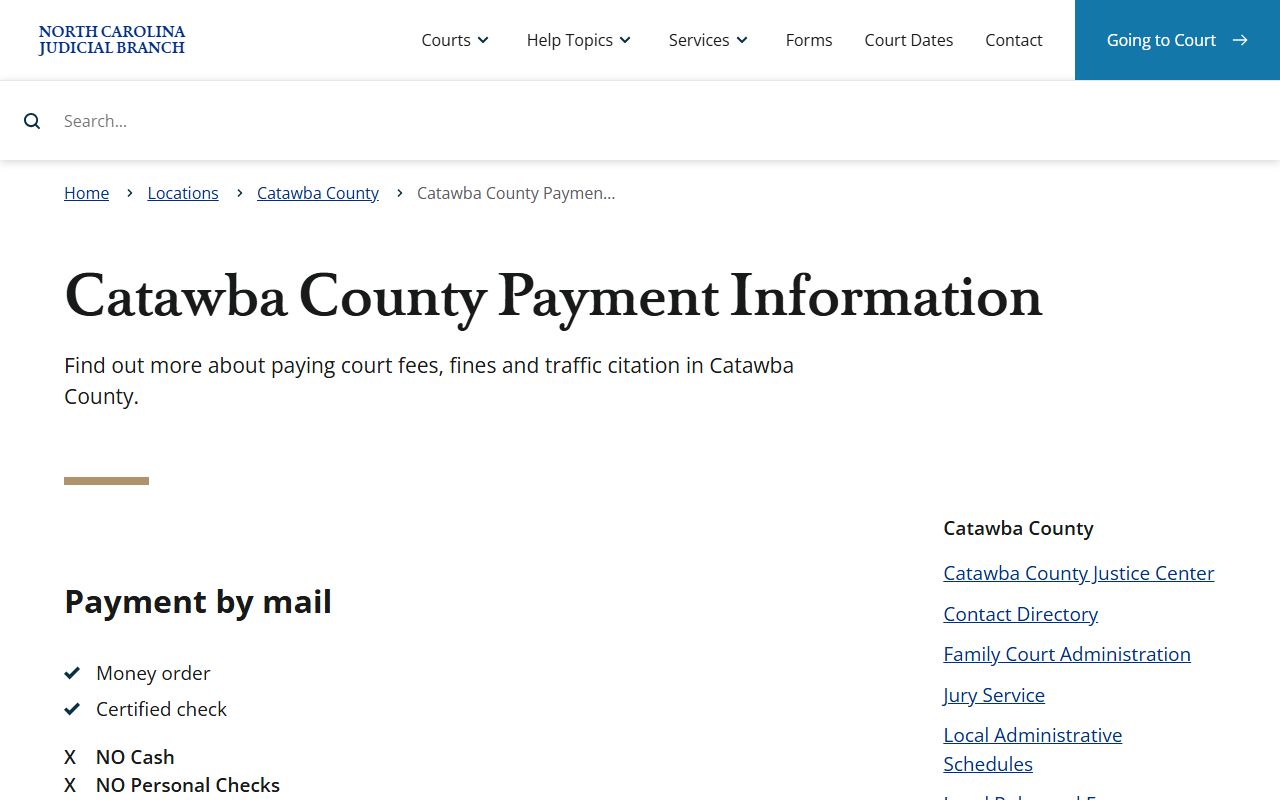
Payment status can be a docket clue, especially for traffic, infraction, probation, parole, and criminal cost obligations.
Catawba Dockets vs Case Files
A docket is useful for tracking movement, but it is not always enough for legal review. A full case file may contain the complaint, summons, citation, indictment, motion, order, judgment, exhibit index, sentence, estate inventory, or divorce judgment. Portal may display some documents, but paper files must be viewed in the county where the case is located.
| Docket | Full Case Record | |
|---|---|---|
| Format | Chronological entries and calendar settings. | Documents, pleadings, orders, notices, and judgments. |
| Access | Often online through Portal or court-date tools. | May require Portal document access, a public terminal, or clerk copy request. |
| Best use | Confirm dates, status, and case movement. | Review legal content, certified copies, and complete filings. |
| Limits | Short labels may omit detail. | Sealed, juvenile, expunged, or redacted materials may be unavailable. |
For broad case access, the related Catawba County court records resource tracks the full record search chain.
Read Catawba County Dockets
Docket language uses compact court terms. A disposition is the outcome of a case or charge. A continuance means a hearing was reset. A motion is a written request for a court order. An order is the judge's ruling. Arraignment is formal charge and plea handling. Bond is security or conditions for release before trial. Expunction is the process that removes or seals qualifying criminal records from normal public view.
Some docket entries point to access limits rather than a final outcome. A sealed record is closed from ordinary public access by law or court order. An expunged case should stop showing in court-system sources after processing. Juvenile, adoption, mental health, protected-party, and personal identifier data may be withheld even when a public docket entry confirms that a case exists.
For local follow-up, use the office that matches the docket issue. The Clerk of Superior Court receptionist is listed at (828) 695-6100, the Criminal Department at (828) 695-6102, the Civil Department at (828) 695-6103, and the Estates/Juvenile Department at (828) 695-6104. Magistrate contacts are separate, with Newton at (828) 695-6119 and Hickory at (828) 327-9093. These numbers are useful when a docket entry points to a setting, bond issue, small claim, juvenile contact, or court-paper problem that the online search does not explain.
Note: A docket can confirm a hearing or status, but certified documents must come from the Clerk of Superior Court.
The manifest image from the Catawba County news page is a reminder to check official local updates before relying on a schedule during closures or service changes.
News and court advisory links can matter when weather, staffing, or statewide eCourts changes affect calendars.