
Catawba County Trial Courts
North Carolina does not run separate county-owned trial courts. The state court system has an appellate division and a trial division, and the trial division is split between Superior Court and District Court. Catawba County is listed by the Judicial Branch as Prosecutorial District 36, Superior Court District 19, and District Court District 36. Both local trial divisions use the Catawba County Justice Center in Newton as the main court facility.
Superior Court hears felony criminal matters, civil cases above the District Court amount range, and appeals from District Court. District Court handles lower-level criminal cases, traffic infractions, juvenile matters, family and domestic cases, civil matters in the lower monetary range, and small claims through magistrates. Court records from both trial divisions are maintained locally by the Clerk of Superior Court.
The North Carolina Judicial Branch courts overview also describes the Court of Appeals, Supreme Court, Business Court, small claims, and Recovery Courts. For Catawba County record users, the practical first split is local: whether a case belongs in Superior Court, District Court, or a magistrate matter.
Catawba County Court Contacts
Catawba County does not have numbered county trial courts like some states. The local table is organized by division and office because North Carolina's trial division uses Superior Court, District Court, magistrates, and court administration contacts rather than separate county court numbers. Each office below is tied to the Justice Center or local magistrate service listed in the research.
| Court or office | Type | Address | Phone |
|---|---|---|---|
| Superior Court Judges | Felonies, high-value civil, District Court appeals | Catawba County Justice Center, 100 Government Drive, Newton | (828) 695-6116 |
| District Court Judges | Misdemeanors, infractions, traffic, family, juvenile, district civil | Catawba County Justice Center, 100 Government Drive, Newton | (828) 695-6215 |
| Clerk of Superior Court | Superior and District Court records | 100 Government Drive, Department A, Newton, NC 28658 | (828) 695-6100 |
| Magistrates - Newton | Initial appearances, process, small claims, preliminary matters | Justice Center / Newton magistrate office | (828) 695-6119 |
| Magistrates - Hickory | Magistrate services for the Hickory area | Hickory magistrate office | (828) 327-9093 |
| Family Court Administration | Domestic and juvenile case coordination | Catawba County Justice Center, Newton | (828) 695-6115 / (828) 695-6118 |
| District Attorney | State criminal prosecution | 100 Government Drive, Department J, Newton | (828) 695-6110 |
Catawba Court Division Comparison
The state court structure map for Catawba County lists lower courts as District Court, magistrates, and municipal police or citation agencies that file into District Court rather than separate municipal courts. That means a traffic citation from a local police agency may start with the agency, but the court case generally routes into District Court records. Small claims and many preliminary matters begin with magistrates.
| Superior Court | District Court | Magistrates | |
|---|---|---|---|
| Civil range | Generally civil cases over $25,000 under G.S. 7A-243 | Generally civil cases at $25,000 or less, with small claims below that range | Small claims under $10,000 |
| Criminal role | Felony trials and criminal matters not assigned to District Court | Misdemeanors, infractions, preliminary examinations, bail, and commitment authority | Initial appearances, warrants, criminal process, and some preliminary functions |
| Family and juvenile | Appeals or matters assigned by law | Domestic, juvenile, child support, and many family court matters | Limited magistrate functions, not full family case administration |
| Record office | Clerk of Superior Court | Clerk of Superior Court | Clerk and magistrate records tied to the underlying case |
Catawba County Case Flow
Case movement depends on the type of dispute or charge. A traffic infraction may begin with a citation and stay in District Court. A felony may begin with an arrest, warrant, summons, or magistrate appearance, then move toward Superior Court if indicted or otherwise placed there. Civil cases are filed based on claim type and amount, with the District Court and Superior Court split guided by state law.
Criminal flow: Arrest or summons › Magistrate or first appearance › District Court setting or preliminary step › Indictment or Superior Court transfer when required › Plea or trial › Disposition and sentence › Appeal.
Civil flow: Complaint or petition filed › Service of process › Answer or response › Motions and hearings › Trial or settlement › Judgment › Appeal.
Note: District Court judgments and some matters can be appealed to Superior Court, while Superior Court matters generally move to the Court of Appeals.
Catawba County Court Records
Trial court records in Catawba County can include pleadings, summonses, charges, indictments, motions, hearing notices, orders, judgments, dispositions, sentencing entries, probation terms, fines, costs, restitution, estate inventories, accountings, and family court orders. The case record is not the same as a court date listing. Court dates show a scheduled event. The full file shows the filings and orders that shape the case.
The NC eCourts Portal provides Smart Search, Search Hearings, Make Payments, and NC Judgment Search. Catawba County was included in the October 13, 2025 eCourts go-live group, which moved electronic filing and online public search into all 100 North Carolina counties. When Portal does not show enough detail, public self-service terminals and paper-file review at the Clerk of Superior Court remain important.
The official court-type page is one of the source images assigned to this page. It summarizes how North Carolina separates Superior Court, District Court, magistrates, and appellate courts.
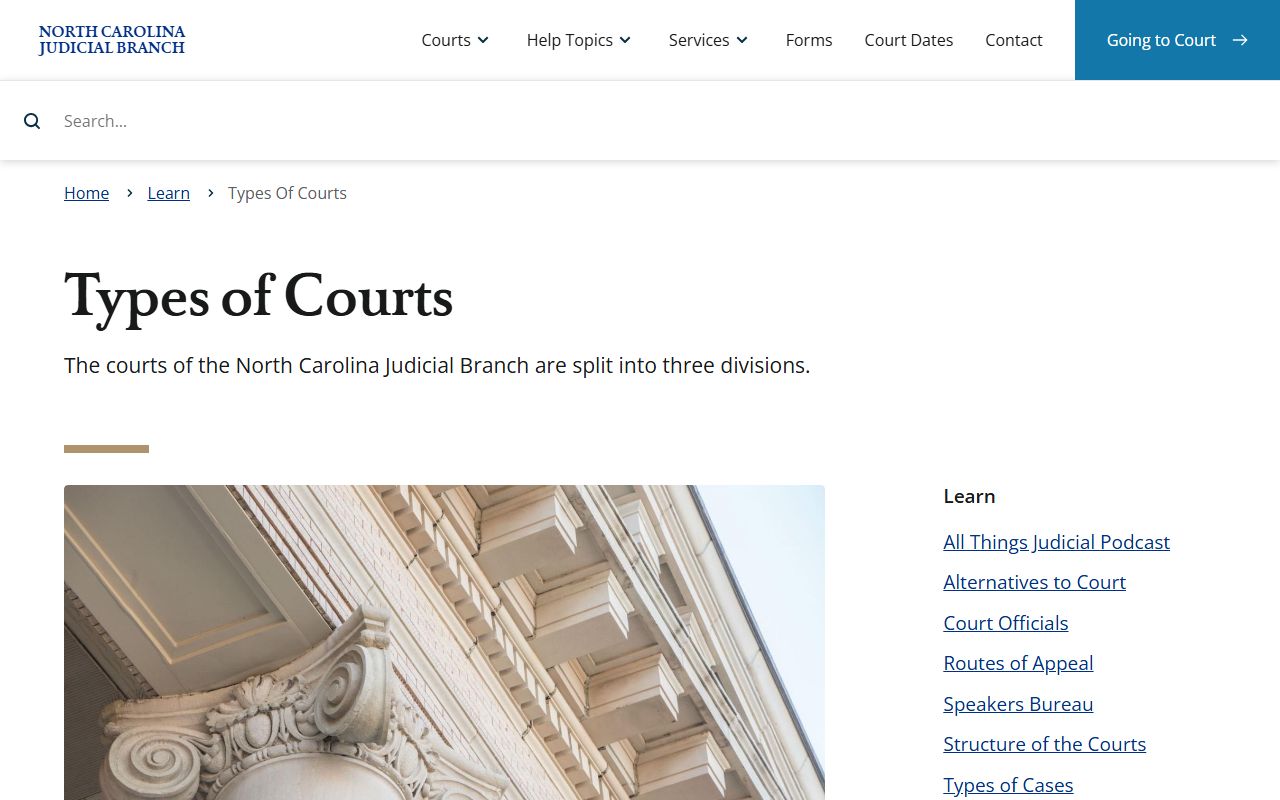
That structure explains why one Catawba County courthouse can hold several kinds of trial court records even though the case types follow different rules.
Catawba County Court Districts
Catawba County's state-court placement is specific. The county is identified as Superior Court District 19, District Court District 36, and Prosecutorial District 36 in the research materials. The District Attorney contact in Catawba County is listed at the Justice Center, and the research notes that official county material points to a prosecutorial district change after January 1, 2027 that should be rechecked before publication after that date.
The county also has Family Court Administration contacts for domestic and juvenile case coordination. Domestic case coordination is listed at (828) 695-6115, and juvenile coordination at (828) 695-6118. Those contacts help route scheduled family and juvenile matters, but restricted juvenile files are not ordinary public court records.
North Carolina Recovery Courts are statewide problem-solving models that may include adult, DWI, family, youth, mental health, and veterans treatment court types. The assigned Recovery Courts image links to the Judicial Branch page describing those models.
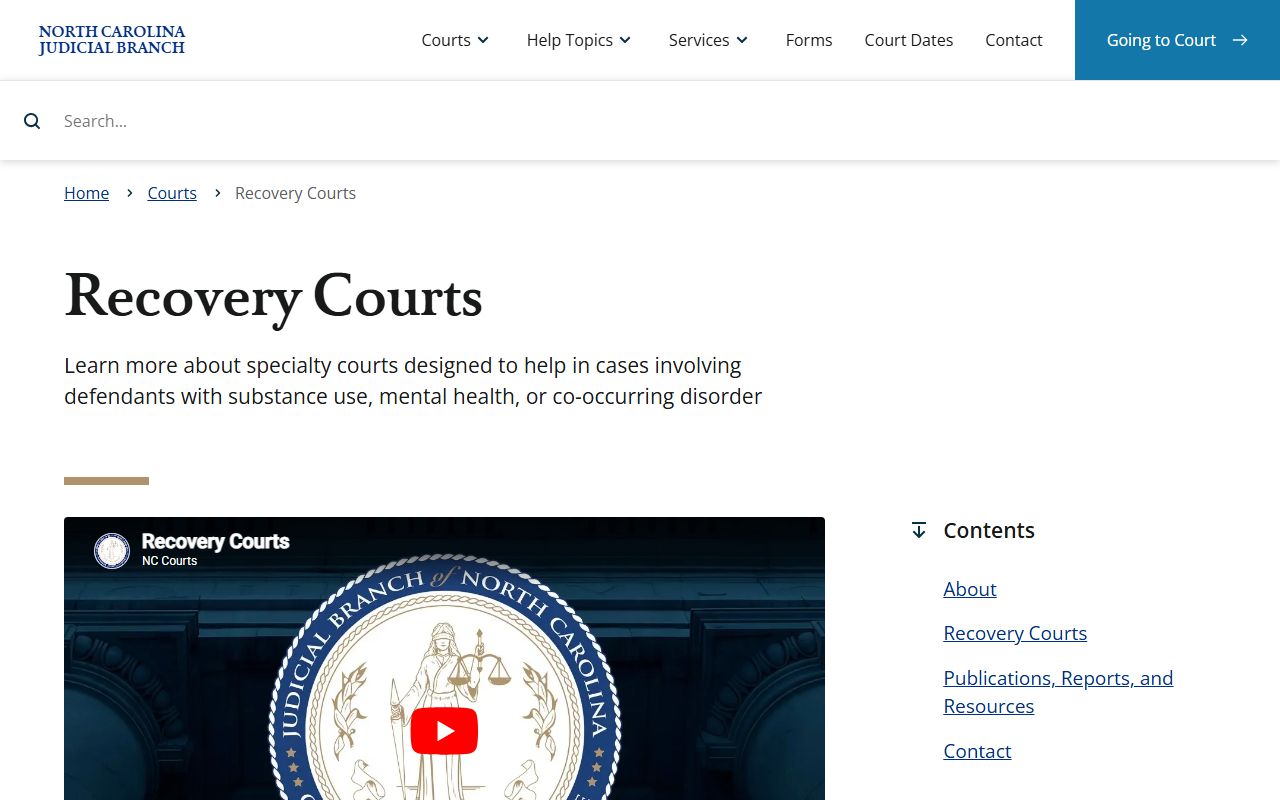
Catawba-specific program details should be confirmed with the Clerk or District Attorney because the research did not locate a current local Recovery Court calendar page.
Catawba County Magistrates
Magistrates are part of the District Court Division and serve under the chief district court judge. In Catawba County, magistrate contacts are listed for Newton and Hickory. The Newton magistrate phone is (828) 695-6119, and the Hickory magistrate phone is (828) 327-9093. Magistrates may handle small claims under $10,000, preliminary criminal proceedings, some guilty pleas or trials, and judicial process such as warrants, subpoenas, or capiases under North Carolina law.
Magistrates are not a public warrant list and should not be presented as a shortcut for confidential law-enforcement information. For court users, they are part of the case path. A person may encounter a magistrate at the start of a criminal matter, in a small-claims filing, or when process is issued. The court record itself is still routed through the clerk and the relevant trial division.
The research also documented Greenway Public Transportation as a local route option for reaching county services. The assigned Greenway image comes from the official fixed-route page.
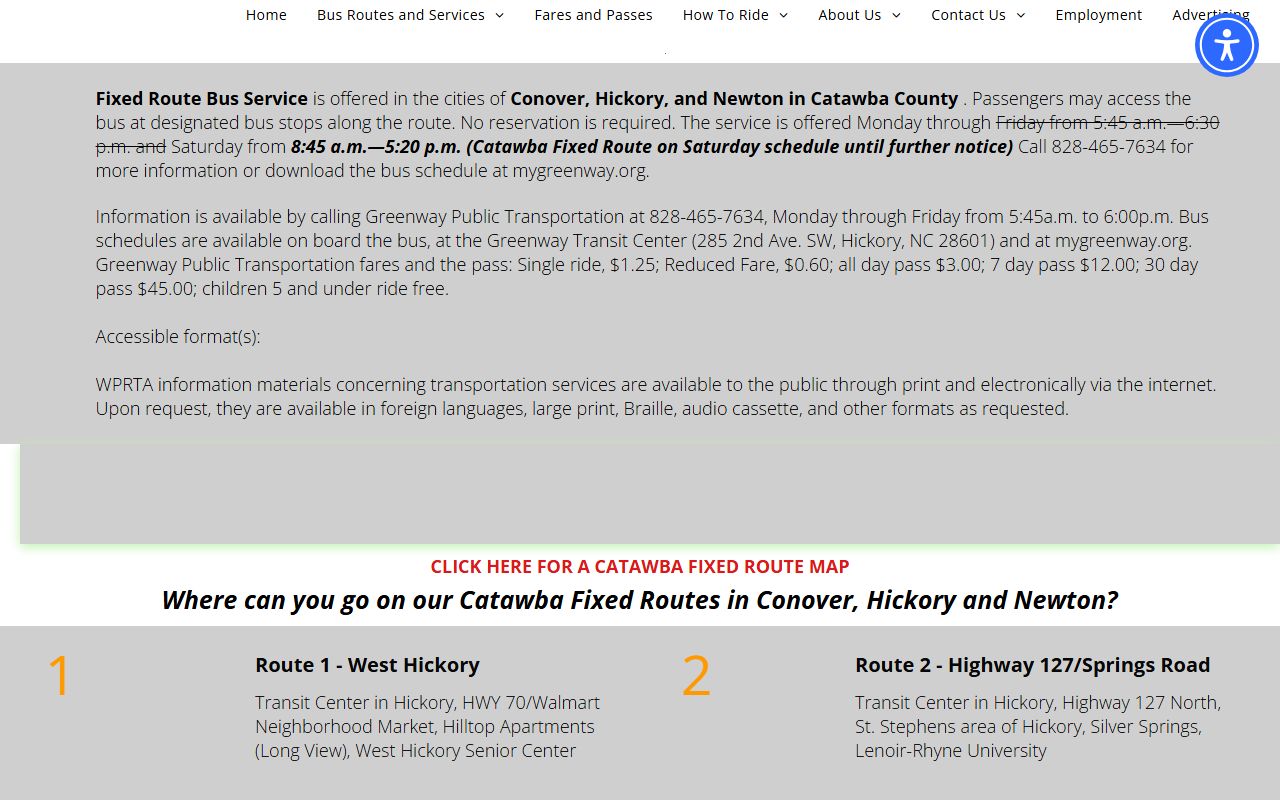
Transit does not replace checking court calendars, but it can matter for court appearances, clerk visits, and magistrate-related trips to Newton or Hickory.