
Catawba County Arrest Records and Charges
Catawba County arrest records are created on the law-enforcement and custody side of a case. They may include the arresting agency, booking or confinement date, charge text, bond amount, docket number, court date, and the agency connected to the custody event. The public jail roster is the custody-side tool for current inmates, while Sheriff report requests can cover incident reports and law-enforcement records when they are available for release.
Court charge records begin when charges are filed and tracked through the court. The District Attorney decides and prosecutes many criminal charges after arrest, including pleas, dismissals, indictments, sentencing advocacy, and victim or witness contact. The Clerk of Superior Court keeps the court case file once the case enters District Court or Superior Court. For full case outcomes, use Catawba County criminal court records.
The manifest image from the Catawba Sheriff Records Division is central because the division maintains a central warrant repository, report records, background-check functions, domestic-violence orders, and sex-offender registration files.
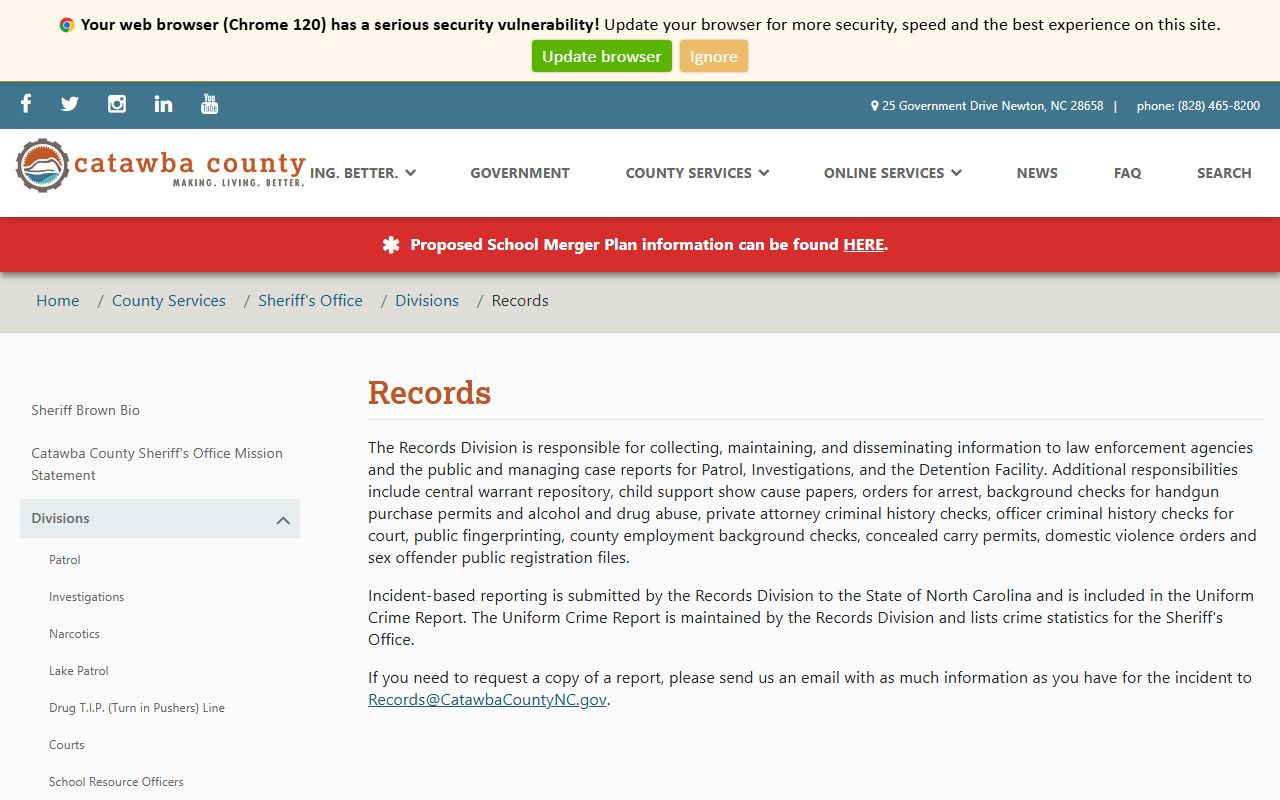
That records office is a law-enforcement channel, while the Clerk is the court-file channel for filed charges and dispositions.
Search Catawba Arrest Records
There is no single official Catawba County page that combines every arrest, booking, charge, disposition, and statewide criminal-history source. The practical route is a chain: check custody records for current jail status, search court records for filed charges, contact Sheriff Records for eligible reports, and use state offender systems for prison, probation, parole, SAVAN, or sex-offender information. Do not use the arrest side as proof of conviction.
- Check the Catawba County jail roster for current custody, charge text, bond amount, docket number, and court date when a person is in jail.
- Search the NC eCourts Portal by defendant name, case number, citation, or hearing filters to find filed charges and charge status.
- Use the Clerk of Superior Court for public terminal searches, paper file review, criminal background checks, and certified copies.
- Request eligible incident reports from Sheriff Records in person or by email with as much incident detail as possible.
- Use NCDAC offender search for state prison, probation, parole, SAVAN, and sex-offender registry links, not county jail custody.
The manifest image from the Sheriff reports request page supports the report-request part of the arrest records path.
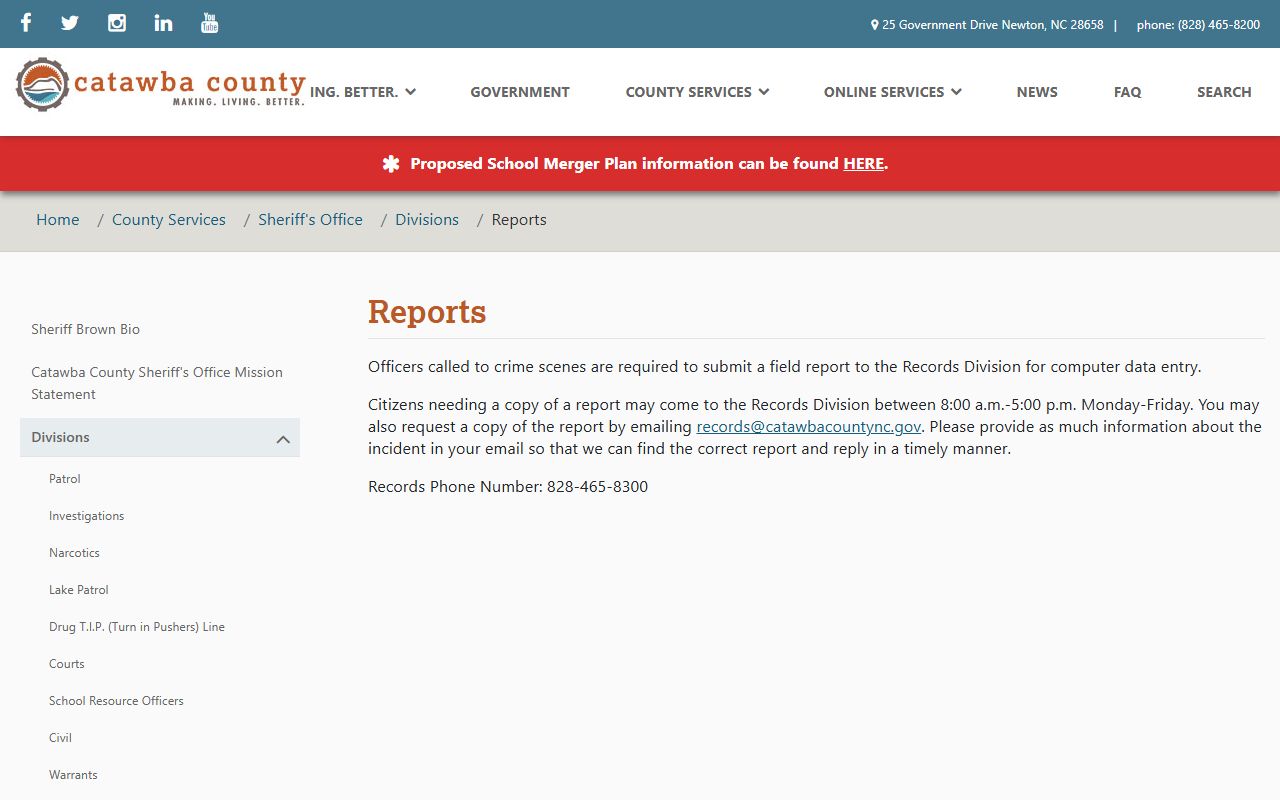
Reports are requested from the Sheriff's Office, while the charge and disposition record is searched through court channels.
Charges After Arrest
After an arrest, the case can move from booking or service of process to formal court charges. North Carolina records may refer to warrants, orders for arrest, criminal summonses, citations, informations, and indictments depending on the charge and stage. A criminal summons orders a person to appear on charges without immediate arrest. An indictment is a formal felony charging document returned by a grand jury. One arrest can produce more than one charge, and charges can be amended, reduced, dismissed, or superseded.
| Complaint or Citation | Information | Indictment | |
|---|---|---|---|
| Filed By | Officer or prosecutor, depending on the case path. | Prosecutor. | Grand jury. |
| Common For | Traffic, misdemeanor, or initial criminal filings. | Selected criminal filings handled by the State. | Felony matters in Superior Court. |
| Record Role | Starts or supports the court charge record. | States the charge prosecuted by the State. | Formally charges a felony for Superior Court handling. |
The image from the Sheriff Civil Division also belongs here because service of legal papers and process is part of the broader court-paper workflow.
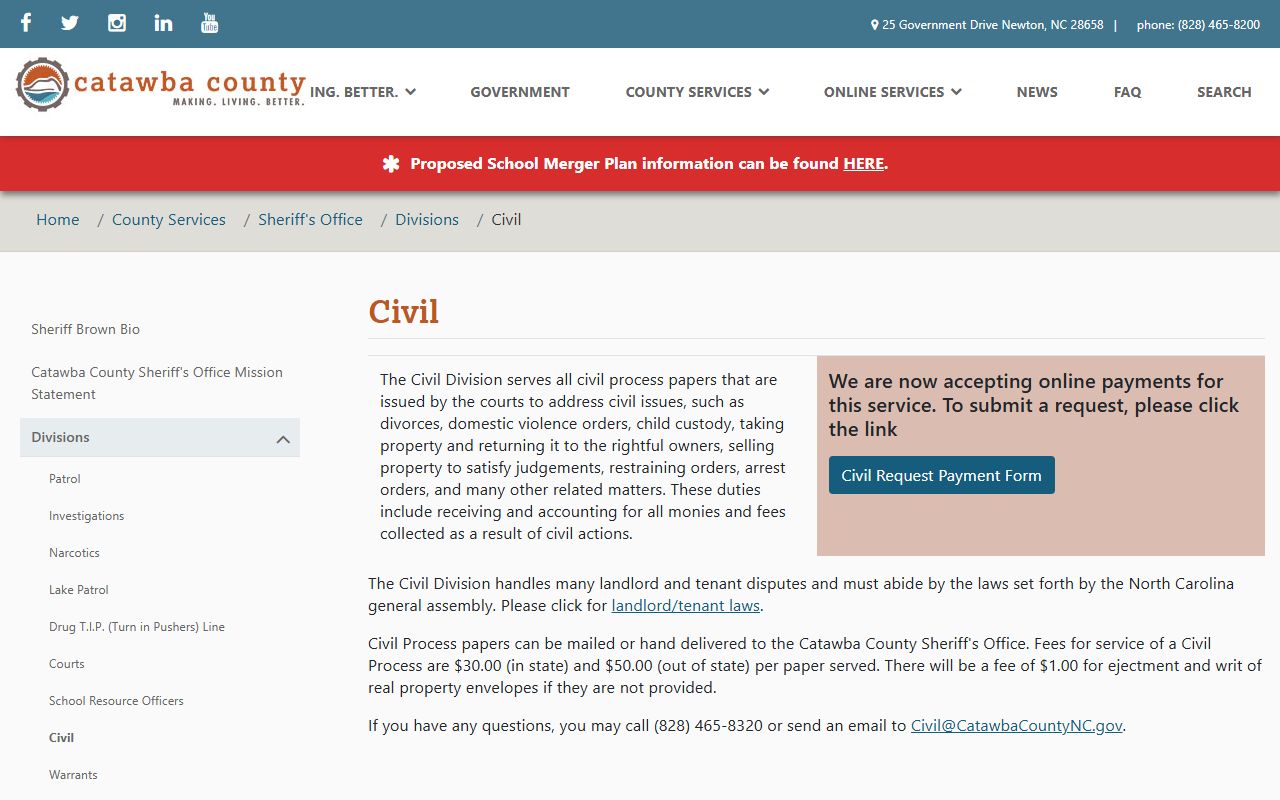
Civil process is not the same as criminal charging, but it shows how Sheriff's Office service duties connect to court orders and papers.
Catawba Charge Status
A charge line is a snapshot, not the whole story. Catawba County charge records may change as the District Attorney reviews evidence, plea discussions occur, a grand jury acts, or the court rules on motions. Portal, docket, and clerk records may show a charge as pending, disposed, dismissed, amended, reduced, deferred, or tied to a sentence. Always match the charge status to the disposition before drawing a conclusion.
| Status | What It Means |
|---|---|
| Pending | The charge is open and has not reached final disposition. |
| Amended or reduced | The original charge changed, often through prosecutor review, plea terms, or court action. |
| Dismissed | The charge was ended without conviction for that charge, subject to the record's exact wording. |
| Disposed | The court entered an outcome, which may be conviction, dismissal, deferral, or another final action. |
| FTA or order-related | A missed court date or court order may create new docket activity or warrant-related entries. |
Note: A custody charge, a filed court charge, and a final conviction are three different record points.
Catawba Charges vs Convictions
Charges after arrest are accusations filed or tracked through court. Convictions are outcomes based on a plea, verdict, or qualifying judgment. Catawba County arrest records may show charges at booking before the court record is complete, while criminal court records show how each charge was handled. A charge can be dismissed, reduced, merged, superseded, or expunged under the right statute.
| Charge | Conviction | |
|---|---|---|
| Stage | Appears after arrest, citation, summons, warrant, or prosecutor filing. | Appears after plea, verdict, or judgment. |
| Meaning | An allegation or filed offense. | A court outcome for an offense. |
| Use | Track what the State accused or filed. | Read sentencing, probation, costs, and legal consequences. |
Statewide Charge Lookups
The NC Department of Adult Correction offender search page covers state prison, probation, parole, SAVAN victim notification, and sex offender registry links. It does not replace Catawba County jail custody records or Clerk of Superior Court criminal case records. Use it when the question concerns state custody or supervision rather than a local court charge line.
The manifest image from the NCDAC offender search page identifies the state-level channel for offender information outside the county court file.
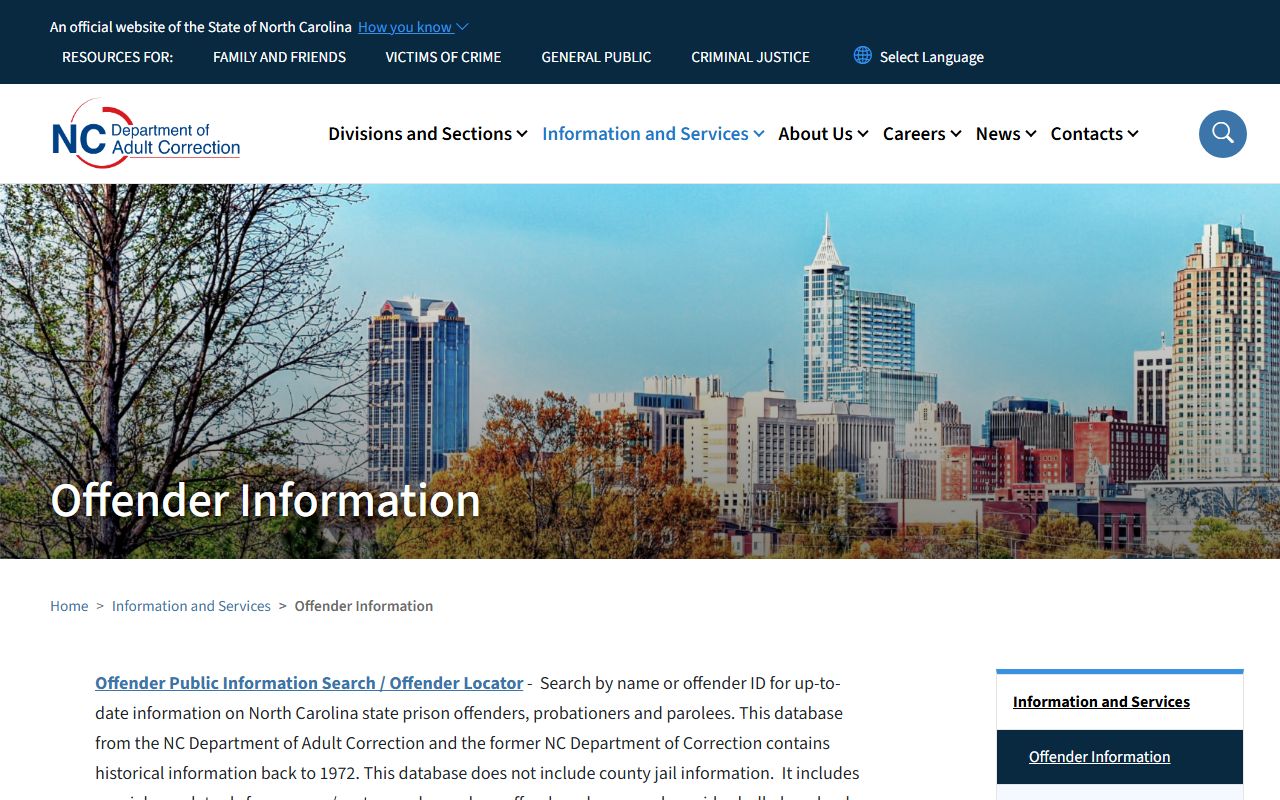
State offender search is useful after sentencing or supervision, but the Clerk remains the court source for the filed charge and disposition.
Restricted Catawba Charge Records
Juvenile charges, sealed cases, expunged records, mental health records, protected-party information, victim data, personal identifiers, and active law-enforcement intelligence can be restricted. North Carolina expunction rules are in Chapter 15A Article 5, and the Judicial Branch says eligibility varies by charge, outcome, age, prior record, waiting period, and statute. A Catawba County expunction petition is filed with the Clerk of Superior Court in the county where the person was charged or convicted.
| Sealed | Expunged | |
|---|---|---|
| Visibility | Hidden from ordinary public access but may still exist. | Removed, sealed, or destroyed from normal public court-system sources. |
| Who may see it | Limited official access may remain under law or order. | Later access is very limited, and copies may not be available. |
| How it happens | By statute, court rule, or judge's order. | By qualifying petition and court order under expunction statutes. |
Catawba Prosecutor and Defense
District Attorney Scott Reilly's office handled Burke, Caldwell, and Catawba counties in the research materials and represents the State in criminal prosecutions. The research also notes an official county elected-officials detail that Catawba's prosecutorial district is expected to change on January 1, 2027, so that fact should be rechecked before any later publication update. Public defense routes through North Carolina Indigent Defense Services, and the IDS Catawba page directs users to the Clerk of Superior Court to find out if they have a lawyer.
The manifest image from the U.S. Attorney's Office for the Western District of North Carolina appears because federal charges are separate from Catawba County court charges.
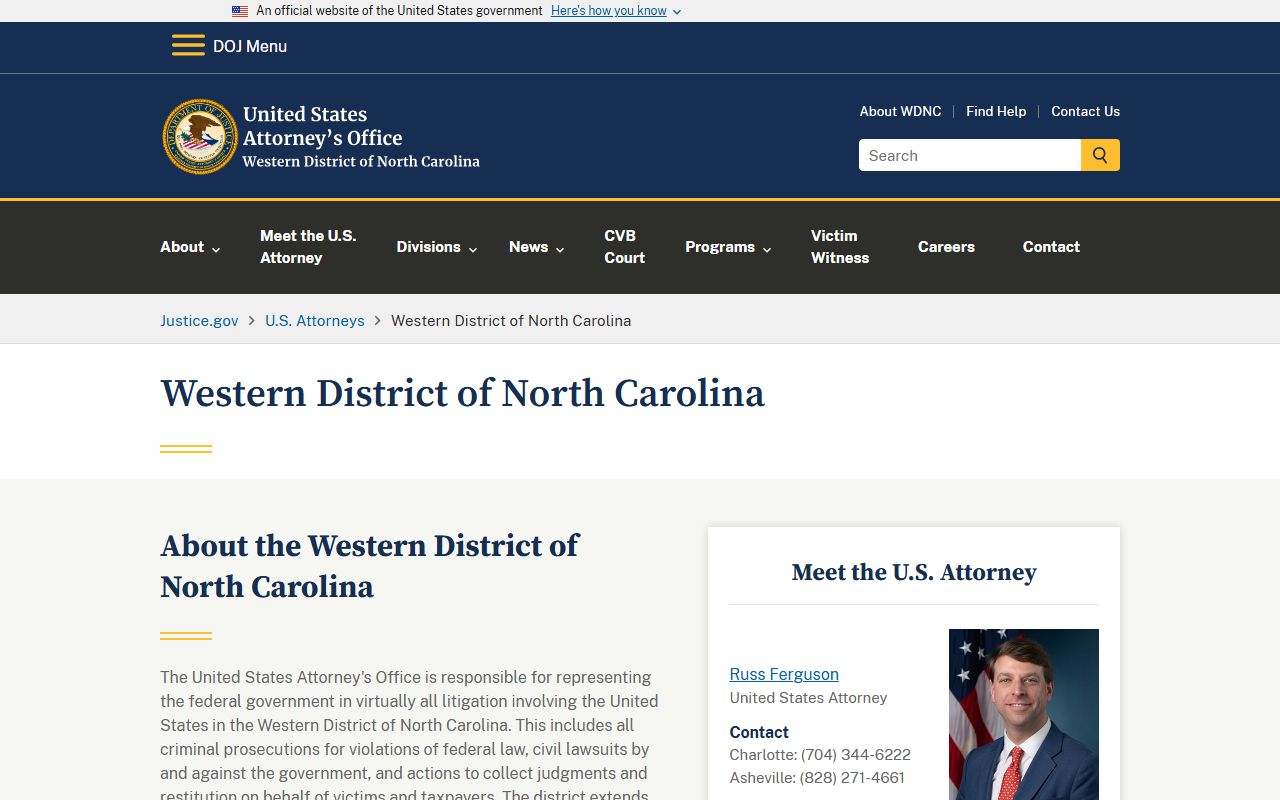
Federal prosecutions are searched through federal systems such as PACER, not through the Catawba Clerk's state trial court file.
The manifest image from District Attorney office news supports the local prosecutor context for court charges after arrest.
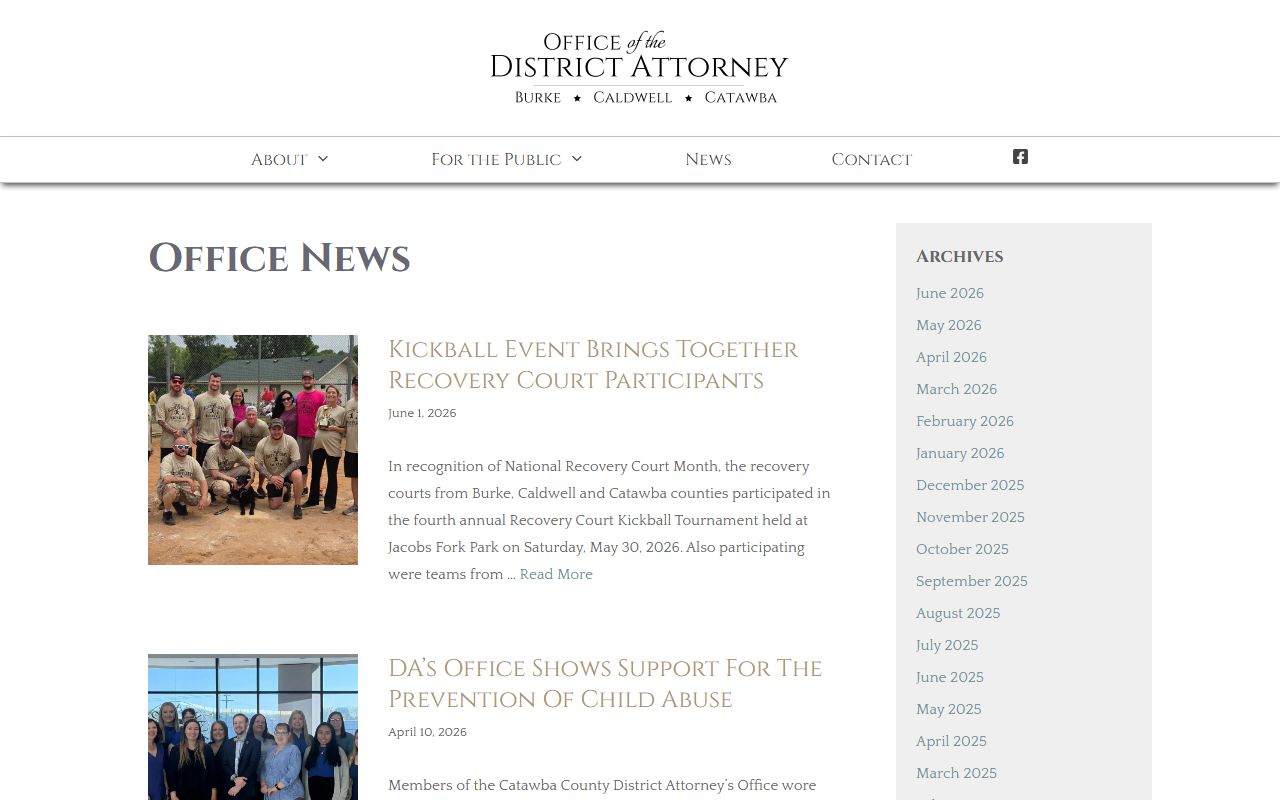
DA updates can explain staffing and prosecution activity, but individual charge status still must be checked in the court record.
Catawba Background Check Limits
NCAOC says people performing criminal background checks should use the county clerk's office and not rely on Portal alone. Sheriff Records also handles several background-check functions described in the research, including checks tied to permits, private attorney criminal-history requests, officer court needs, county employment, and related records duties. These are official channels, not third-party aggregator searches.
Important: Arrest records and charge records are not FCRA consumer reports and should not be used as one.