
Search Catawba County Court Records
Catawba County court records are searched through a mix of the North Carolina eCourts Portal, public self-service terminals, and clerk file review. The Portal supports Smart Search, hearing search, online payments for eligible matters, and judgment search. It is now a central point for Catawba County case lookup because Catawba was included in the final statewide eCourts group. The Portal is useful for names, case numbers, citations, attorneys, and dates, but it does not replace the Clerk of Superior Court for every file or certified copy need.
The official Catawba County court page links court records, court dates, calendars, payment information, local rules, jury service, and county contact pages. If a court record is not complete online, public terminals at the Clerk of Superior Court can be used for criminal, civil, special proceeding, and estates searches. Paper files must be reviewed in the county where the case is located, so Catawba County files route to the clerk in Newton.
The North Carolina eCourts Portal screenshot source shows the public entry point for Smart Search, hearings, payments, and judgment search.
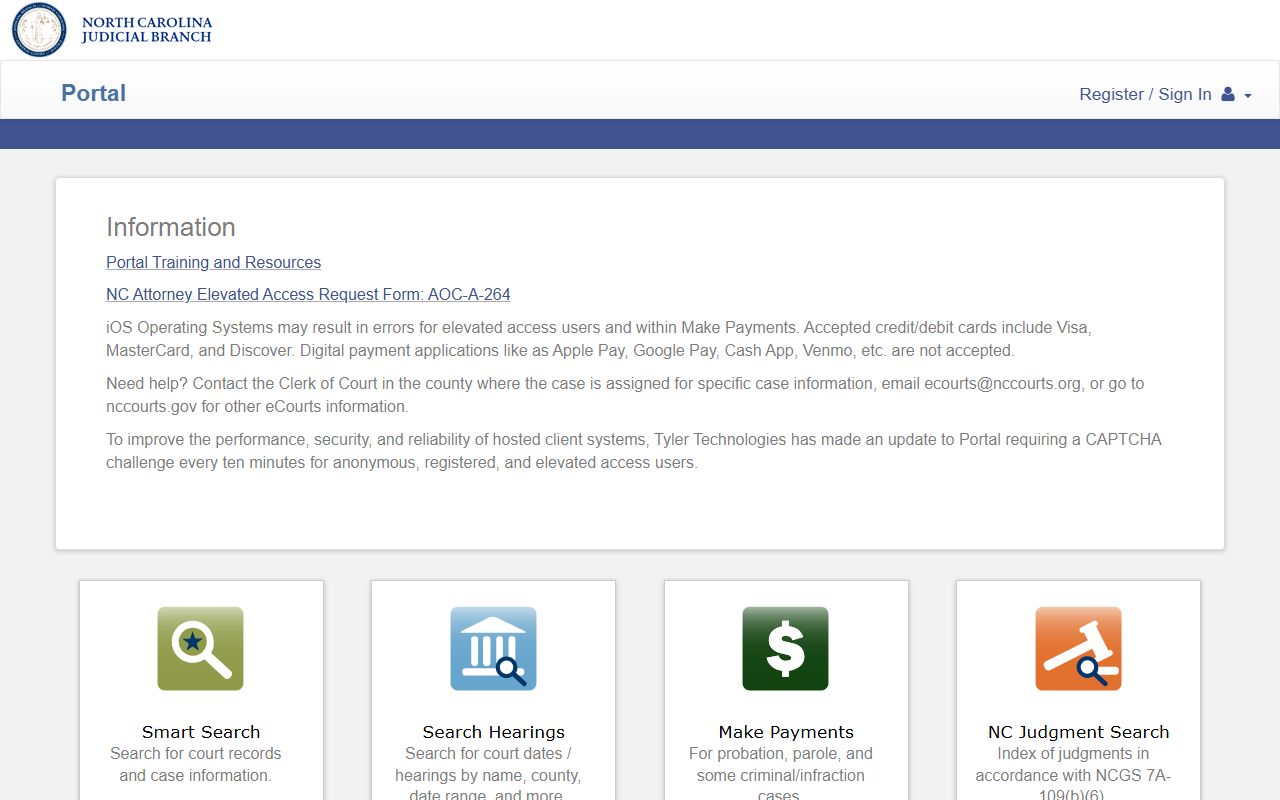
That statewide portal matters in Catawba County because it is the online channel most users reach before they need a clerk terminal or paper file.
- Open the Portal and choose Smart Search for case information or Search Hearings for court dates.
- Search by party name, case number, citation, attorney, county, or date range when those fields apply.
- Use Catawba County as the location filter when a statewide result set is too broad.
- Review docket entries, hearings, documents, payments, judgments, and restricted-access notices with care.
- Contact the Clerk of Superior Court for certified copies, paper files, older records, or background-check work.
Where Catawba County Court Records Are Kept
The main court-records counter for Catawba County is at the Catawba County Justice Center in Newton. The Justice Center page lists the courthouse address, mailing address, phone, and public hours. The same Government Drive campus also includes court offices, the District Attorney, Sheriff’s Office, and detention operations, which helps when a record search moves from a court docket to a jail, warrant, or prosecutor question.
The Clerk of Superior Court is the court clerk for both Superior Court and District Court records. The county clerk information page names Kim R. Sigmon and explains that the clerk belongs to the North Carolina Court System rather than county government. The Register of Deeds is a separate county office for recorded land records, marriage licenses, marriage certificates, birth records, and death records. Divorce judgments remain court records at the clerk.
The Catawba County Justice Center source identifies the active courthouse for court records and court services.
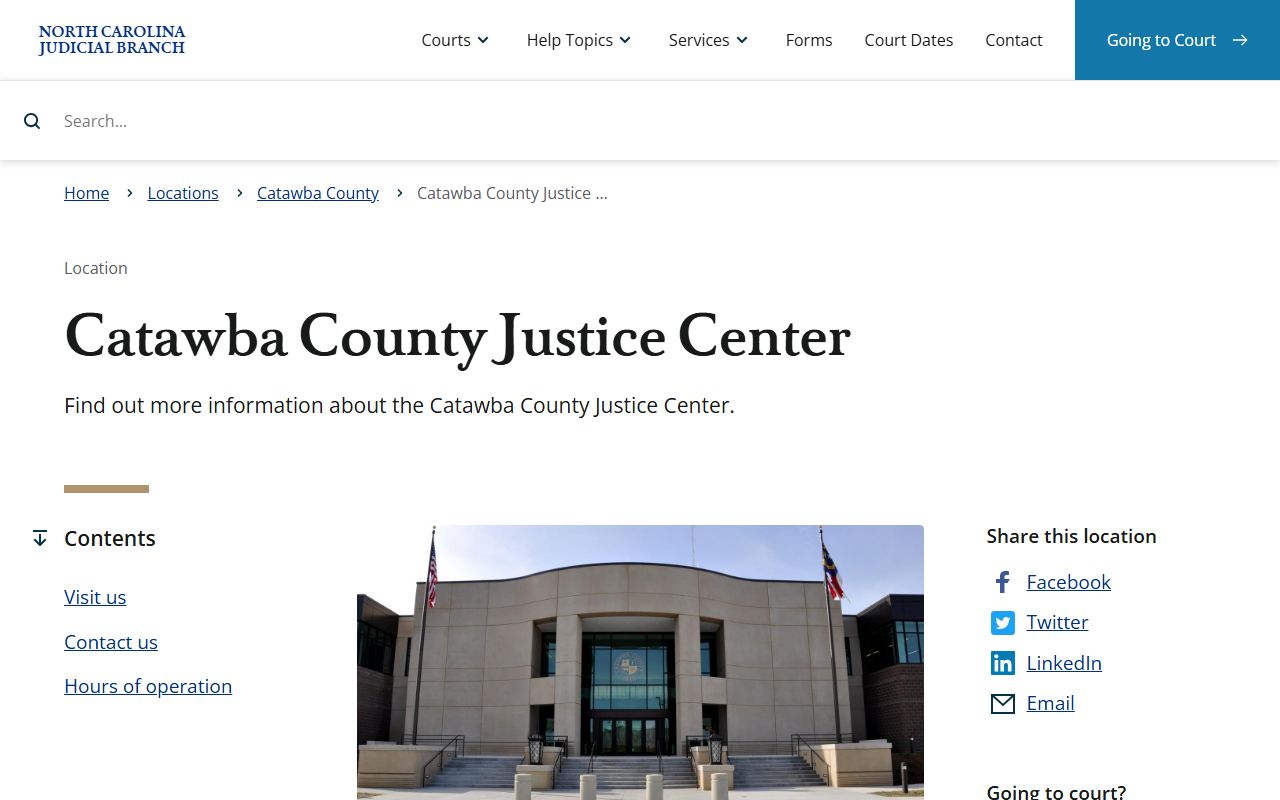
Use the Justice Center for active court business rather than the older downtown courthouse that appears in some local history references.
Catawba County Justice Center
100 Government Drive
Newton, NC 28658
(828) 695-6100
Monday-Friday, 8:00 a.m.-5:00 p.m.
Clerk of Superior Court
100 Government Drive, Department A
Newton, NC 28658
(828) 695-6100
Civil, criminal, estates, family, and special proceeding files
Register of Deeds
100 Government Drive, Department C
Newton, NC 28658
(828) 465-1573
Marriage, vital, and recorded land records
Catawba County Court System
North Carolina uses a unified state court system. Catawba County is not running a separate county trial court. Local cases are handled in the trial division of the North Carolina courts, with Superior Court and District Court sitting at the Justice Center. Catawba is listed as Prosecutorial District 36, Superior Court District 19, and District Court District 36 in the research materials reviewed.
Superior Court handles felony crimes, civil cases above the District Court amount range, and appeals from District Court. District Court handles misdemeanors, infractions, traffic matters, juvenile matters, domestic cases, lower civil cases, and small claims through magistrates. Magistrates also handle preliminary criminal matters and certain small-claims work. Appeals can move from District Court to Superior Court, then to the North Carolina Court of Appeals and, in some cases, the Supreme Court of North Carolina.
The NC Judicial Branch Catawba County source places local court services within the statewide court structure.
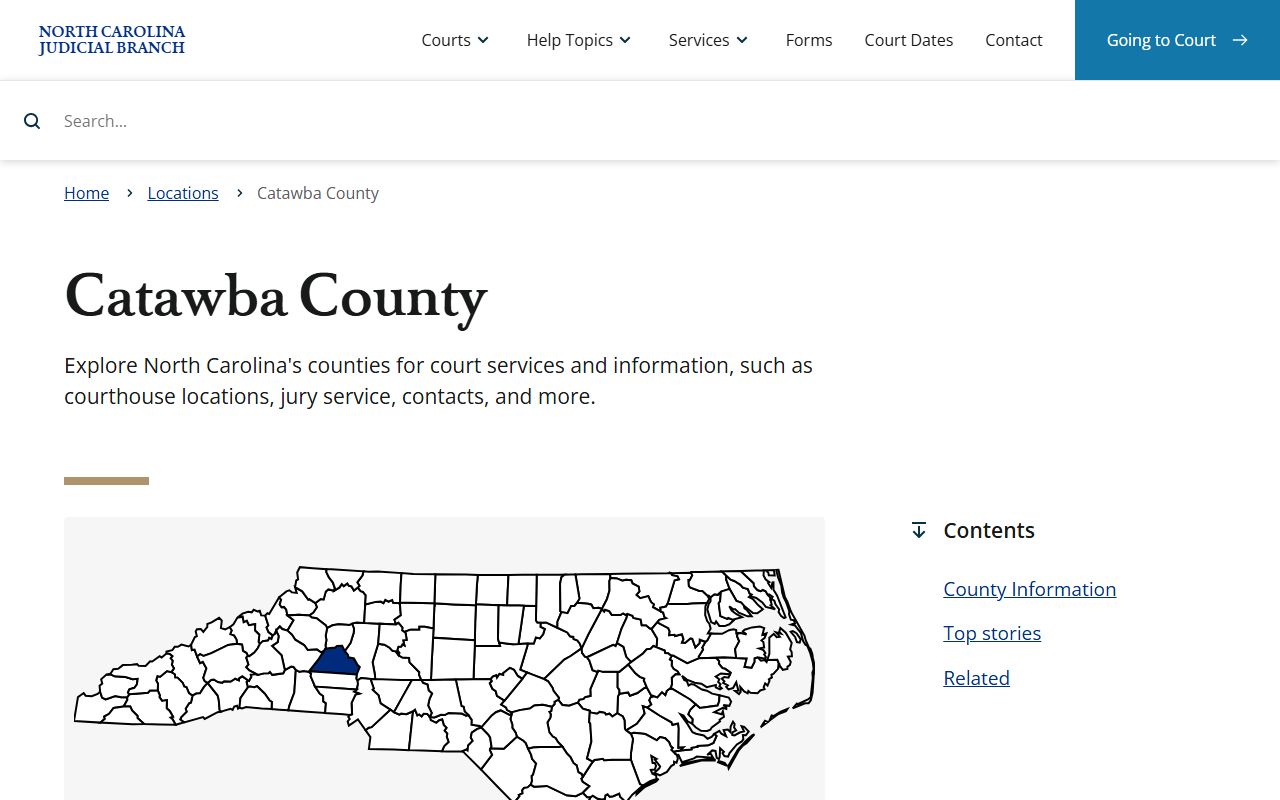
The county page is a useful starting point because it ties case search, calendars, payment links, and courthouse contacts together.
| Court or office | Role in Catawba County | Contact |
|---|---|---|
| Superior Court | Felonies, higher civil cases, and appeals from District Court | Superior Court Judges, (828) 695-6116 |
| District Court | Misdemeanors, infractions, traffic, family, juvenile, and lower civil cases | District Court Judges, (828) 695-6215 |
| Magistrates | Small claims and preliminary criminal matters | Newton (828) 695-6119; Hickory (828) 327-9093 |
| District Attorney | State prosecution in criminal cases | (828) 695-6110 |
Catawba County Court Record Types
Catawba County court records include civil files, criminal files, traffic and infraction cases, domestic cases, estates, special proceedings, small claims, protective orders, judgments, liens, and court calendars. Each record type has its own access path. Portal search is often the first check, but public terminals, copy requests, and department-specific contacts still matter.
Criminal records may include charges, warrants or orders for arrest where public, appearances, bond, pleas, dismissals, verdicts, sentencing, probation terms, fines, costs, and post-judgment motions. Civil records may include complaints, summonses, answers, motions, orders, judgments, liens, executions, foreclosures, partitions, and appeals. Family and juvenile records require more care because some case types are public while others are restricted by law or court policy.
- Civil records: complaints, answers, motions, orders, judgments, foreclosures, evictions, partitions, and condemnations.
- Criminal records: charges, case events, pleas, bond, dispositions, sentences, fines, costs, and probation terms.
- Traffic records: citations, court dates, waiver status, payment status, dispositions, and failure-to-appear consequences.
- Estate records: wills, estate applications, inventories, accountings, claims, guardianships, and related special proceedings.
- Family records: divorce, custody, child support, domestic violence, and juvenile coordination, with restricted categories.
Catawba County Court Record Fields
A Catawba County court record may show the case number, court, party names, filing date, offense date, hearing date, judge, courtroom, case type, status, disposition, documents, and financial obligations. Criminal docket examples from the jail roster use North Carolina formats such as a two-digit year, “CR,” a number, and a county code. Some rows also show court dates and holding agencies.
Online case information can be enough for a quick court date or status check, but legal use often needs a copy from the clerk. Certified copies, complete paper files, and older files may require clerk staff. For background checks, North Carolina court guidance says the county clerk should be used rather than relying on Portal alone.
| Field | What it shows |
|---|---|
| Case number | The official docket or case identifier, including criminal formats such as 26CR299222-170. |
| Court | District Court, Superior Court, Newton District Court, or another county court if applicable. |
| Parties | Defendant, plaintiff, petitioner, respondent, decedent, or other party names when public. |
| Events | Hearings, filings, notices, motions, orders, court dates, and calendar settings. |
| Disposition | Pending, dismissed, guilty, not guilty, deferred, appealed, closed, sealed, or expunged status. |
| Financial items | Fines, costs, restitution, attorney fees, bond, payments, and eligible online payment data. |
Catawba County Court Records Access
North Carolina public-record access starts with a broad rule in G.S. 132-1, which defines public records as materials made or received in connection with public business. Court files still have separate court rules, statutes, sealing orders, and redaction rules. A public-record request is not the same as a case-copy request when the normal case file process already applies.
The Judicial Branch public-record request page routes requests for existing Judicial Branch public records that are not handled through standard case search or clerk copies. For county and city documents, the same source directs users to the county or city office that holds the record. Sheriff reports and Register of Deeds certificates follow their own county processes.
The Judicial Branch public-record source separates court case access from other public-record request paths.
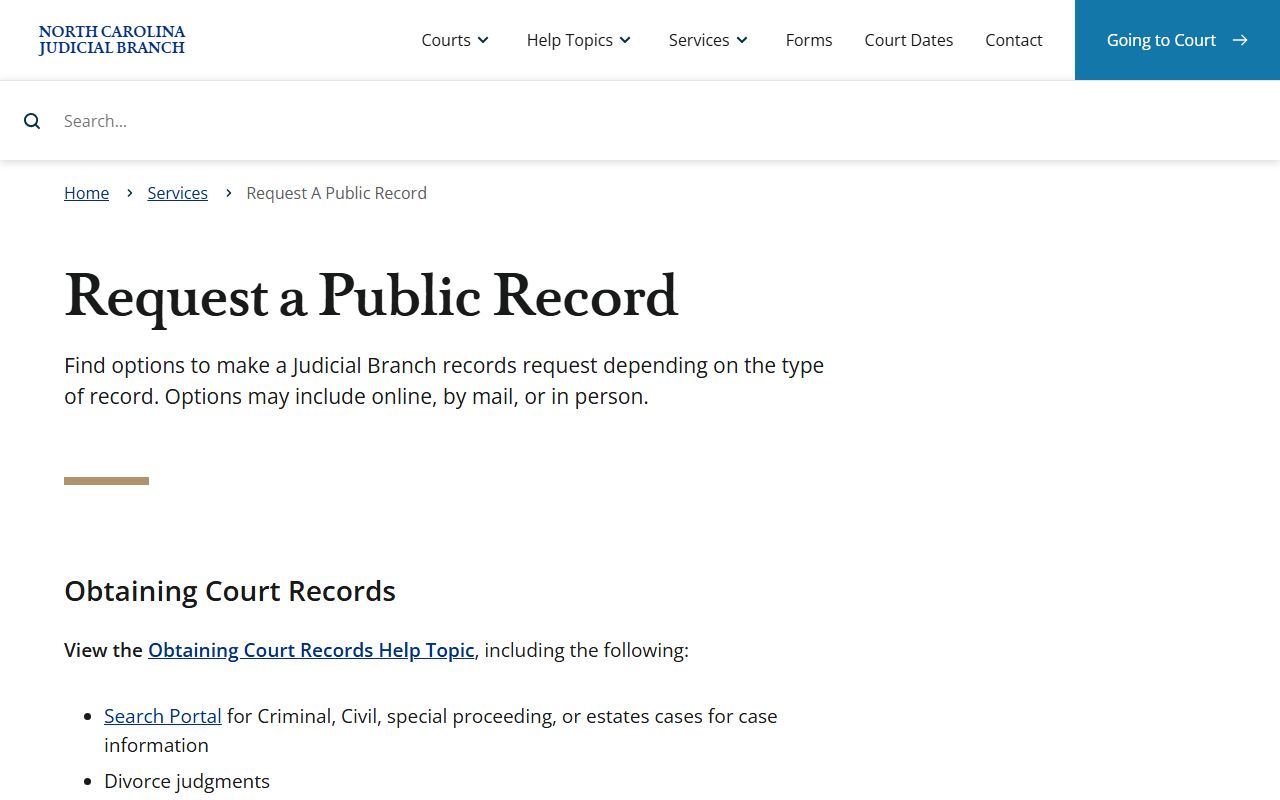
That distinction helps avoid sending a court case copy request to the wrong public-record channel.
Key statutes:
G.S. 132-1 defines North Carolina public records in broad terms.
G.S. 7A-243 divides many civil matters between District Court and Superior Court by amount in controversy.
G.S. 7A-271 gives Superior Court broad criminal jurisdiction for matters not assigned elsewhere.
G.S. 7A-272 gives District Court jurisdiction over lower-level criminal matters and preliminary proceedings.
Restricted Catawba County Court Records
Not all Catawba County court records are open through Portal or public terminals. Juvenile delinquency, abuse, neglect, dependency, adoption, mental health, sealed cases, expunged matters, and protected personal identifiers have limits. Some records are public in part, with names, financial account numbers, Social Security numbers, minor information, protected addresses, or medical data redacted.
Expunction is a formal North Carolina process that can remove and seal or destroy qualifying criminal records. A Catawba County petition is filed with the Clerk of Superior Court in the county where the person was charged or convicted. Eligibility depends on the charge, outcome, age, waiting period, prior record, prior expunctions, and the statute used. The general filing fee in the research is $175, though some dismissed or not-guilty categories have no fee unless diversion or deferred prosecution applies.
Note: If an expunction is granted, later copies may not be available because court-system records are destroyed or sealed.
Catawba County Sheriff and Jail Records
The Catawba County Sheriff’s Office is led by Sheriff Don Brown and is based on the Government Drive campus. The Sheriff’s Office handles calls for service, civil process, criminal papers, investigations, school resource officers, narcotics, sex offender registration work, and detention operations. The detention facility is a 579-bed county jail after expansions in 2007 and 2021.
Current custody checks use the public Who’s in Jail roster. The roster can show inmate name, date confined, address, age, charge, bond, court date, court docket, writ status, and agency. State prison, probation, and parole records use the NC Department of Adult Correction offender searches, not the county jail roster.
The Catawba County Sheriff source identifies sheriff services and the detention facility tied to court records and inmate searches.
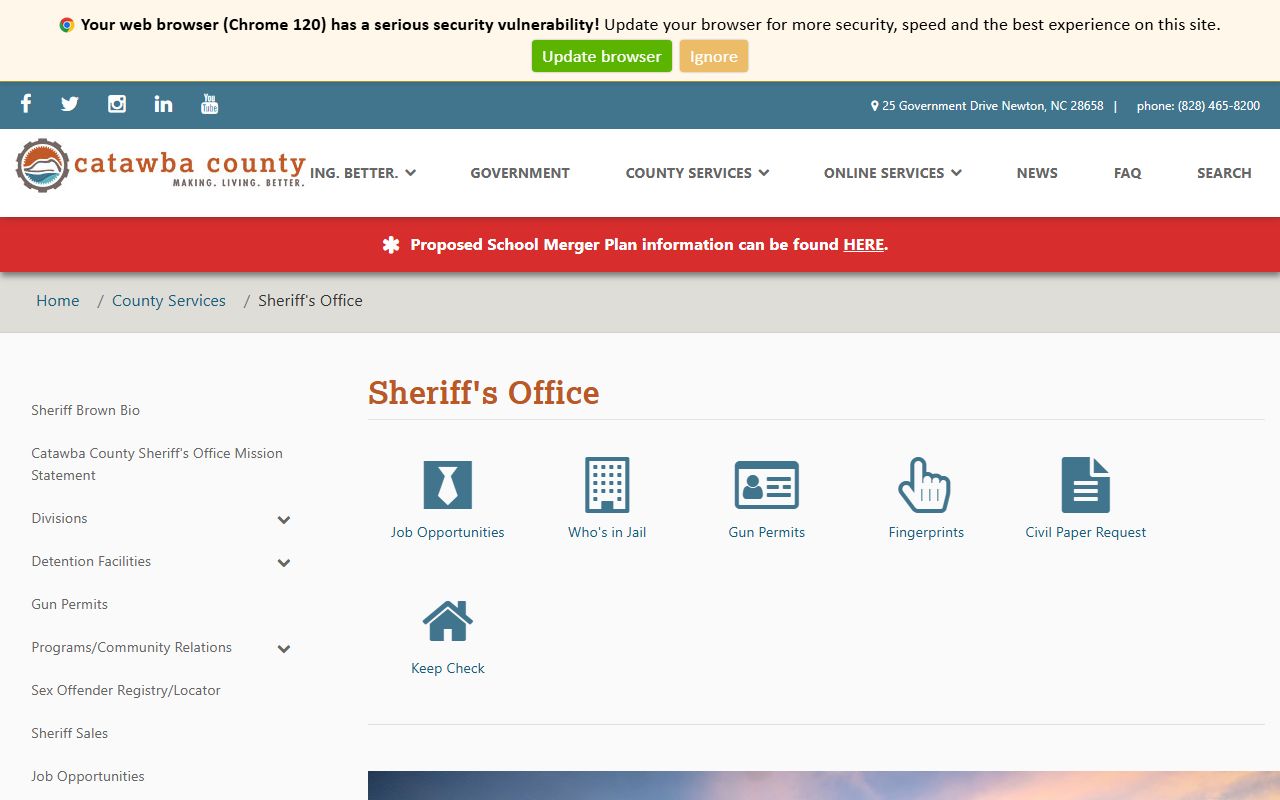
Sheriff and jail records often bridge the gap between an arrest, a court date, and the criminal court docket.
Catawba County Warrant Records
Catawba County does not have an official public active-warrant search listed in the research. The Sheriff Warrants Division serves warrants, criminal summonses, and show-cause orders. Its key local rule is direct: outstanding warrant inquiries are not done over the phone. That makes court dates, Portal checks, clerk channels, magistrate routing, lawful in-person contact, and legal counsel more important than a phone call.
Warrant-related records may include the subject name, warrant or order type, case number, charge or obligation, issuing court, bond conditions, service status, agency, and later court date. Sealed search warrants, juvenile warrants, confidential victim data, and law enforcement intelligence can limit release. A missed court date can lead to an order for arrest or other court action, depending on the case.
| Channel | Use | Limit |
|---|---|---|
| Sheriff Warrants Division | Serves warrants, summonses, and show-cause orders | No phone confirmation for outstanding warrants |
| eCourts and hearing search | Checks known cases, hearings, citations, and docket events | Not a full active-warrant list |
| Clerk and magistrates | Routes case, bond, court-date, and process questions | Access depends on case status and legal limits |
| Records Division | Maintains central warrant repository and related records | Release depends on public-record limits |
Catawba Marriage Divorce Probate Records
Marriage records in Catawba County are handled by the Register of Deeds, not the Clerk of Superior Court. The Register issues marriage licenses, keeps marriage certificates, and provides vital-record copy guidance. The county marriage page lists a $60 marriage application fee and says applicants can begin online, but both parties must appear at the Register office unless a special hospitalization, prison, or military instruction applies.
Divorce judgments are court records held by the Clerk of Superior Court in the county where the divorce was granted. North Carolina Vital Records has divorce certificates from 1958 forward, but the judgment itself comes from the clerk. Probate is handled through the Estates Division of the Clerk of Superior Court, not a separate Catawba County probate court.
The Catawba County Register of Deeds source separates marriage and recorded-document work from trial-court records.
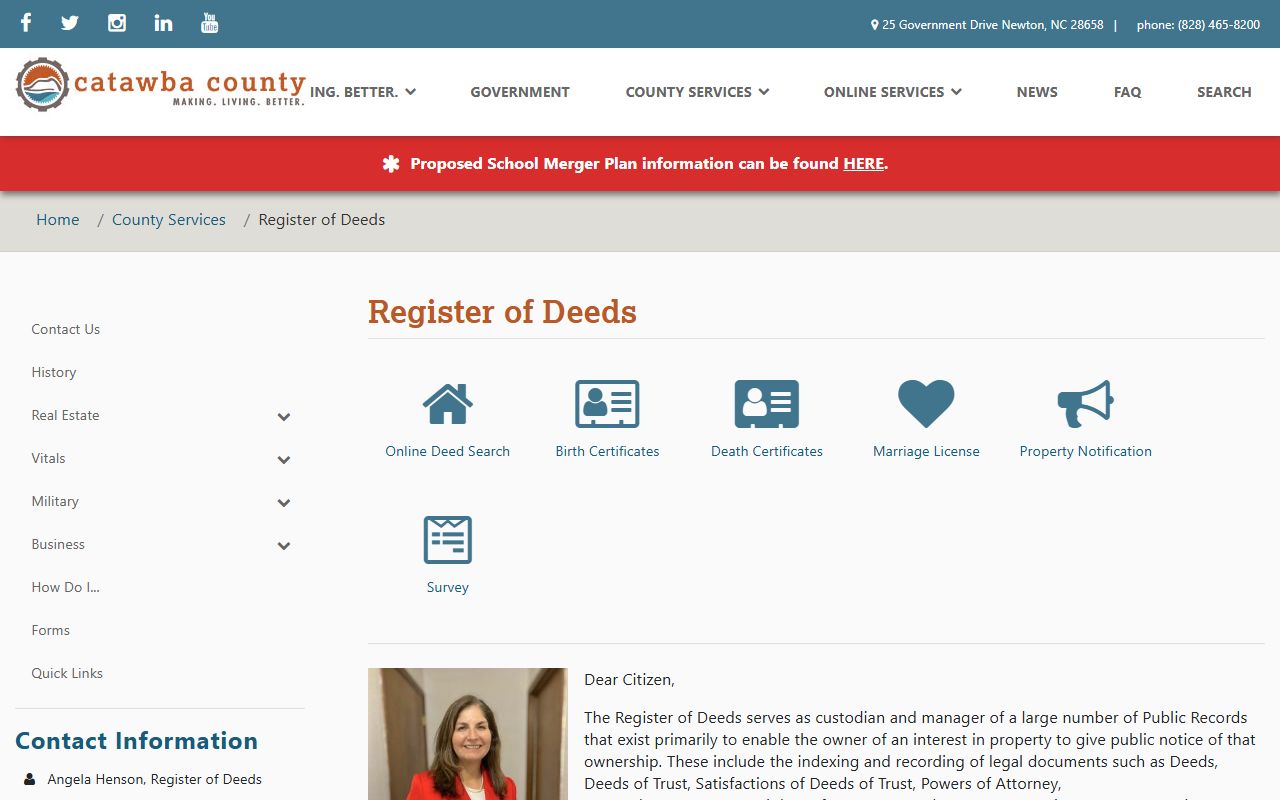
That office split is important because using the wrong counter can delay marriage, divorce, deed, and estate record requests.
- Estate
- The court-supervised property and claims of a deceased person.
- Executor
- A personal representative named to handle estate duties under a will.
- Intestate
- A person died without a valid will controlling property distribution.
- Guardian
- A person appointed to protect a minor or incapacitated person’s interests.
Catawba County Court Dates
Court dates and dockets are separate from full case files. Hearing search can show when a matter is scheduled, while a full case file can show filings, orders, disposition, and documents. Catawba court pages link Search Hearings, civil calendars, criminal calendars, and local administrative schedules. The Justice Center page also links CourtDelta for court-date checks, with fields for name, contact information, case or citation number, and a court-date request.
The official Catawba County court contact directory is useful when a calendar result is unclear. It lists the clerk, judges, District Attorney, magistrates, family court, juvenile contacts, estates, and department email listings. Public jail roster rows can also show court dates and docket numbers, which can help connect an inmate search to the court docket.
The Catawba County court contact directory source supports direct routing when online docket data does not answer a timing question.
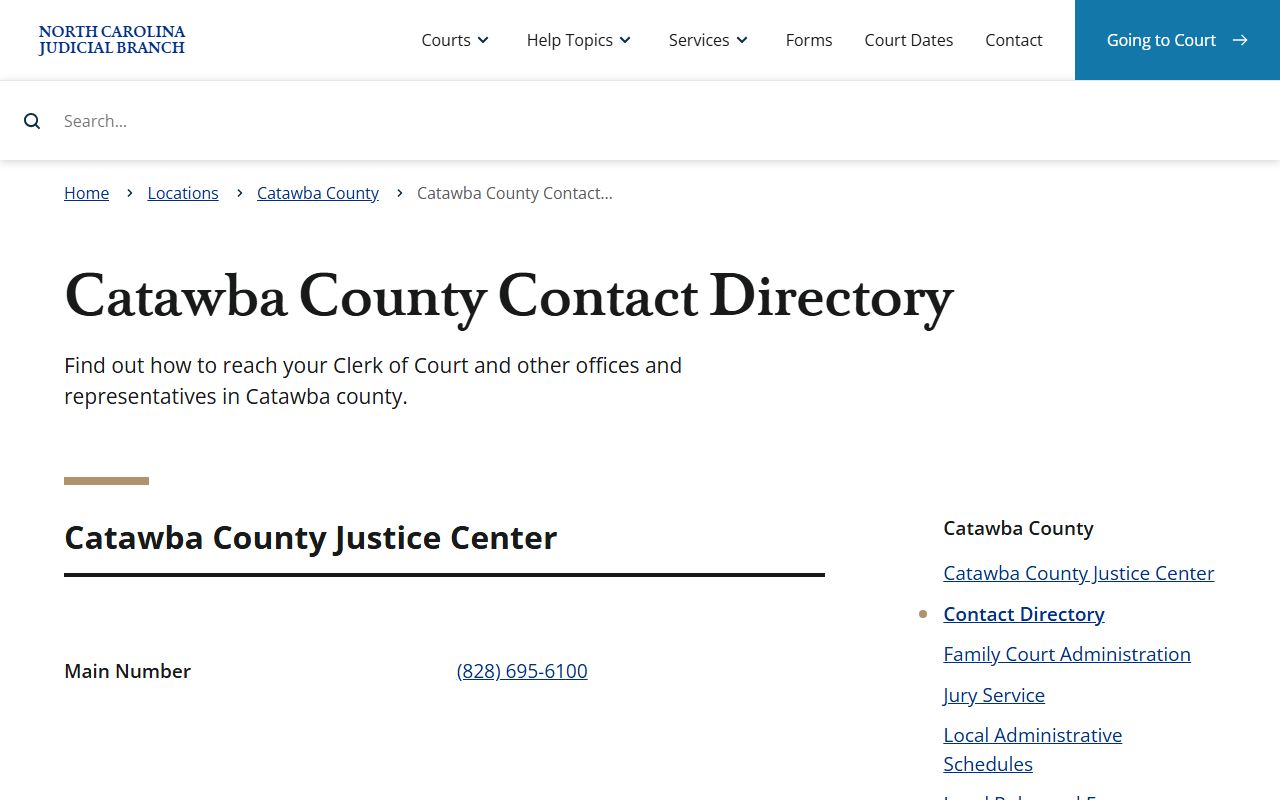
Contact directories matter most when a hearing has moved, a case is restricted, or a department-specific question needs the right counter.
Catawba County Court Fees
Court copies, certified copies, estates costs, civil costs, criminal costs, and special proceeding costs are controlled by current statewide cost publications rather than a single Catawba-only HTML fee list. The NC Judicial Branch current court costs page links active cost PDFs. Records users should verify copy and certification costs with the clerk before mailing a request.
Some related county record fees are clear from local pages. A marriage application is $60 through the Register of Deeds. Certified vital-record copies are $10 each. Sheriff civil process service is $30 in state and $50 out of state, with a $1 ejectment or writ envelope rule if not provided. The general expunction filing fee listed in court guidance is $175, with some exceptions.
| Item | Amount or rule |
|---|---|
| Marriage application | $60.00 |
| Certified vital-record copy | $10 each |
| Expunction petition | Generally $175, with exceptions for some outcomes |
| Sheriff civil process | $30 in state; $50 out of state |
| Court copies and certified copies | Use current statewide court-cost publications and clerk confirmation |
Catawba County Court History
Catawba County was formed in 1842 from Lincoln County, with Newton as the county seat. The county has eight municipalities: Brookford, Catawba, Claremont, Conover, Hickory, Long View, Maiden, and Newton. The modern court-records counter is at the Justice Center on Government Drive, but local court history is also tied to the 1924 courthouse downtown near A Street and Main Street.
Recent court-record access changed with the October 13, 2025 eCourts launch group. Catawba joined Alexander, Burke, Caldwell, Cleveland, Davidson, Davie, Gaston, Iredell, Lincoln, McDowell, Rowan, and Rutherford in that rollout. The Judicial Branch said eCourts was then available in all 100 North Carolina counties, bringing electronic filing and online search into central use for Catawba County court records.
The Catawba County Clerk source identifies local court record-keeping through the Clerk of Superior Court.
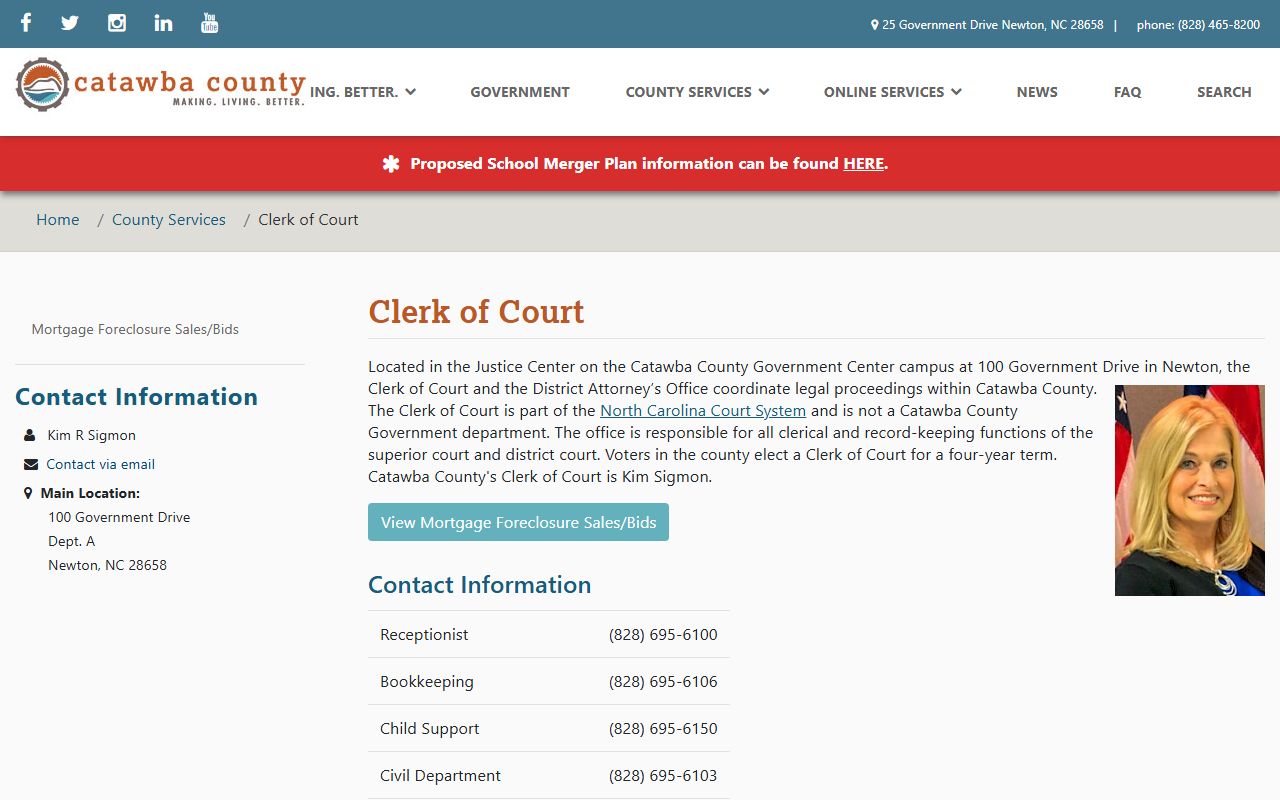
The clerk’s role stayed central even after online records expanded through the statewide eCourts system.
Catawba County Record Terms
Court records use terms that are simple once tied to the file. A docket is the chronological case list. A disposition is the result of a charge or case. A plea is the defendant’s answer to a criminal charge. A bond is the security or release condition before trial. An expunction is the legal process to remove and seal or destroy qualifying criminal records.
The North Carolina court-records help source explains how case files, public terminals, paper records, and copy requests work.
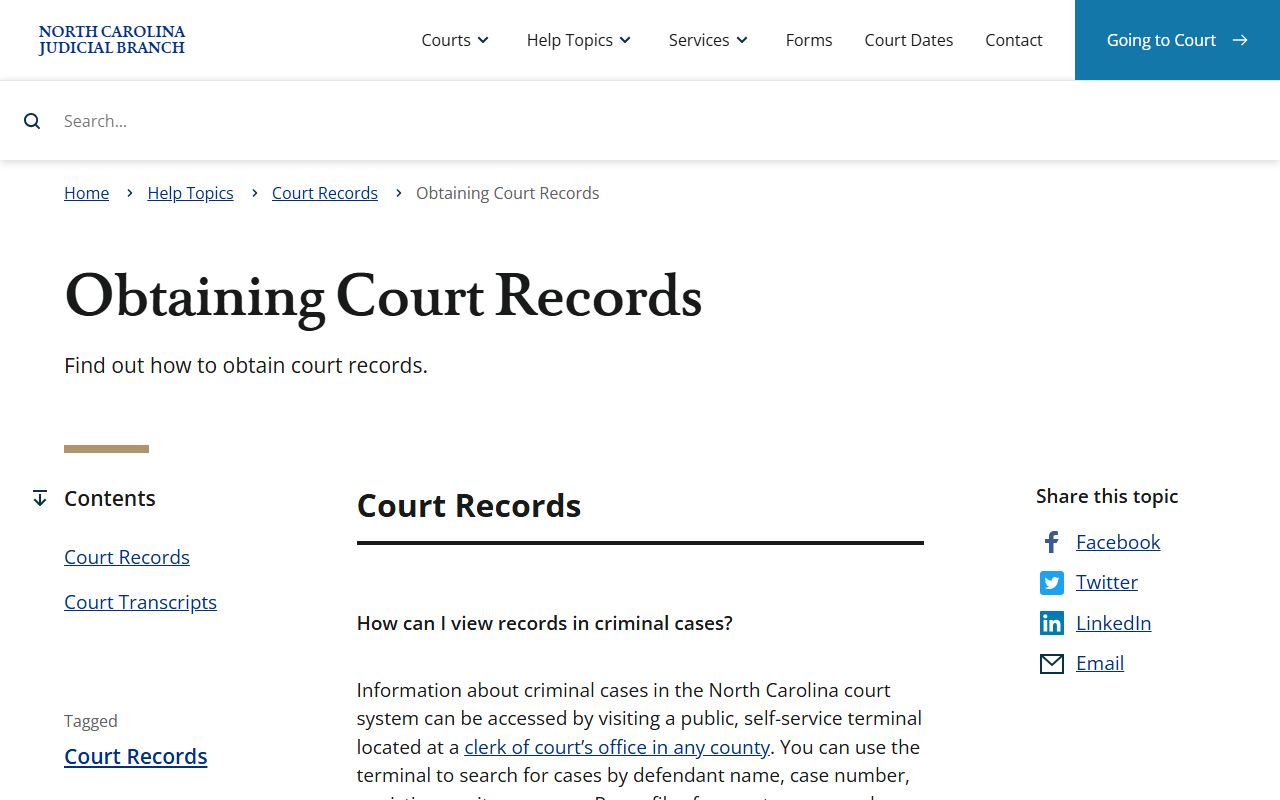
Those help materials are most useful when an online result needs to be turned into a record request or paper-file review.
- Docket
- A chronological list of case filings, hearings, and events.
- Disposition
- The final or current outcome of a charge or case.
- Indictment
- A formal felony charging document returned by a grand jury.
- Continuance
- A court date or hearing moved to a later date.
- Expunction
- A court process that removes qualifying records from ordinary public access.
Catawba County Court Records FAQ
Can Catawba County court records be searched online? Yes. Start with the North Carolina eCourts Portal for Smart Search, hearings, payments, and judgment search. Public terminals and paper files at the clerk remain important for full records, certified copies, background checks, and older or limited-access matters.
Who keeps Catawba County criminal court records? The Clerk of Superior Court keeps local Superior Court and District Court case files. The District Attorney prosecutes state criminal cases, while the Sheriff handles jail, warrant service, reports, civil process, and related law-enforcement records.
Are Catawba County inmate records the same as court records? No. The Who’s in Jail roster is a custody tool, though it can show charges, bonds, court dates, docket numbers, and agencies. Full court case files and outcomes are handled through court records.
Does Catawba County publish active warrants online? The research did not locate an official public active-warrant search. The Sheriff Warrants Division states that outstanding warrant inquiries are not done by phone, so known cases should be checked through court records, court dates, counsel, or lawful in-person channels.
Where are Catawba County divorce records? Divorce judgments are court records held by the Clerk of Superior Court in the county where the divorce was granted. NC Vital Records has divorce certificates from 1958 forward, but the court judgment comes from the clerk.
Where are Catawba County probate records? Estate files are handled by the Estates Division of the Clerk of Superior Court. Portal and public terminals may show case information, while older or paper estate files can require clerk review.